How to maintain several running AI agents
Experiment
•
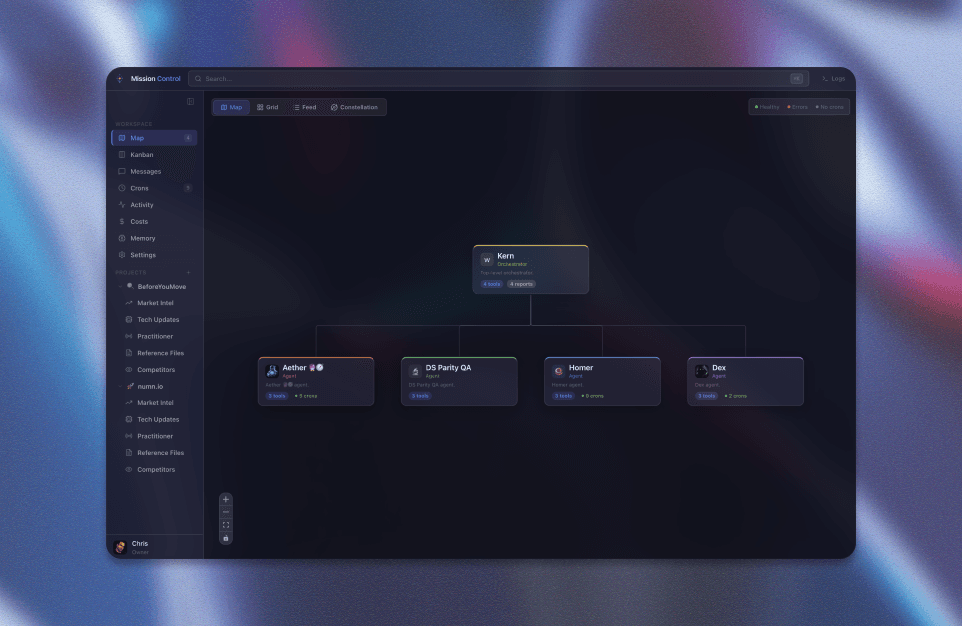
An open-source, local-first dashboard for monitoring and managing AI agent fleets.
Built on top of OpenClaw, OCD gives an overview sessions, logs, configs, cost data, memory health, and agent activity in a single control layer, running fully on your machine with no cloud telemetry. Open Openclaw Mission Control
Why I built it
As soon as you run more than one or two autonomous agents, the workflow becomes hard to trust.
You lose visibility into what agents are doing, how much they cost, where they drift, which workflows are active, and whether memory or configuration is still healthy.
I built OpenClaw Dashboard to explore what “agent operations” should look like when AI agents become part of real product and engineering workflows.
AI stack
Built with AI-assisted development across product framing, interface design, code generation, debugging, documentation, and release iteration.
The product itself uses Next.js, React, TypeScript, Tailwind, SQLite, SSE streams, Chokidar watchers, TanStack Query, Zustand, and local parsing of the ~/.openclaw/ workspace.
Highlights
Created a local-first command centre that reads OpenClaw data directly from the user’s machine.
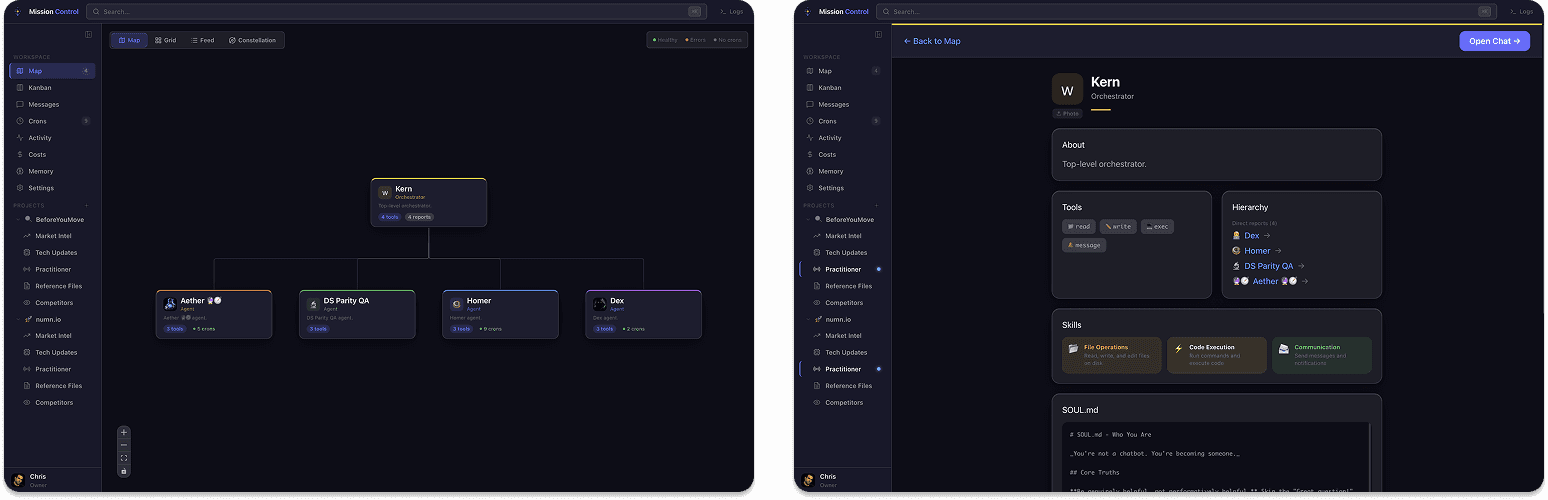
Multiple fleet views, including org map, grid, feed, and constellation graph.
Per-agent detail pages with personality files, conversation history, traces, drift detection, and context-health signals.
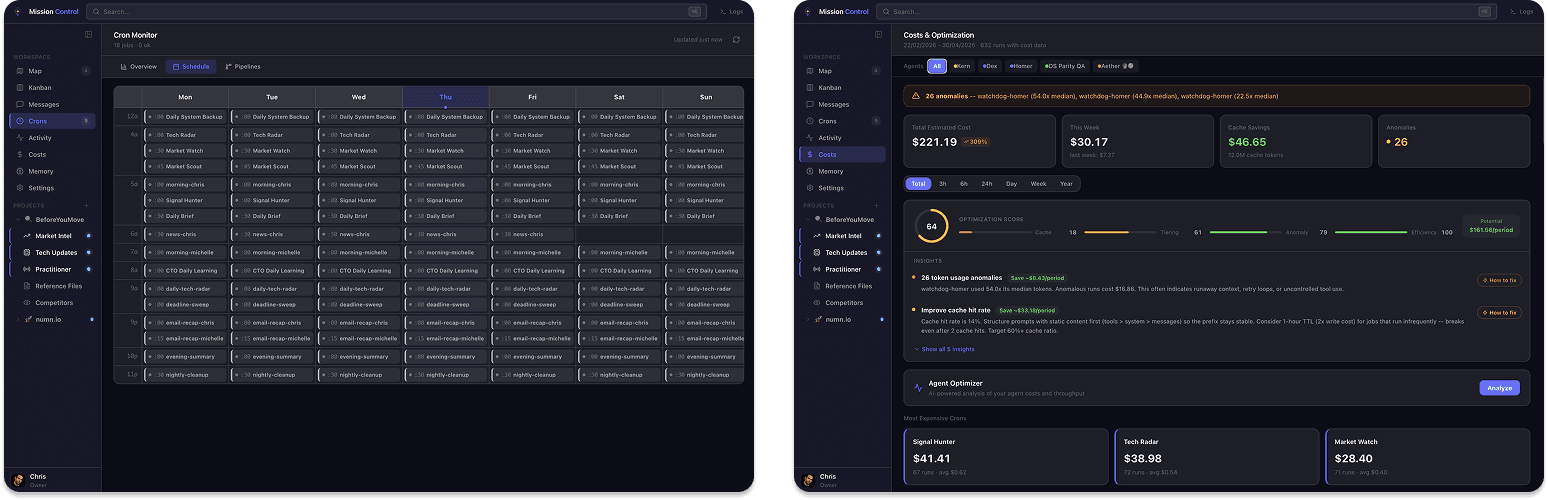
Cost analytics with per-agent and per-provider attribution at token level.
Visual cron pipeline builder for agent workflows, including DAG editing and run history.
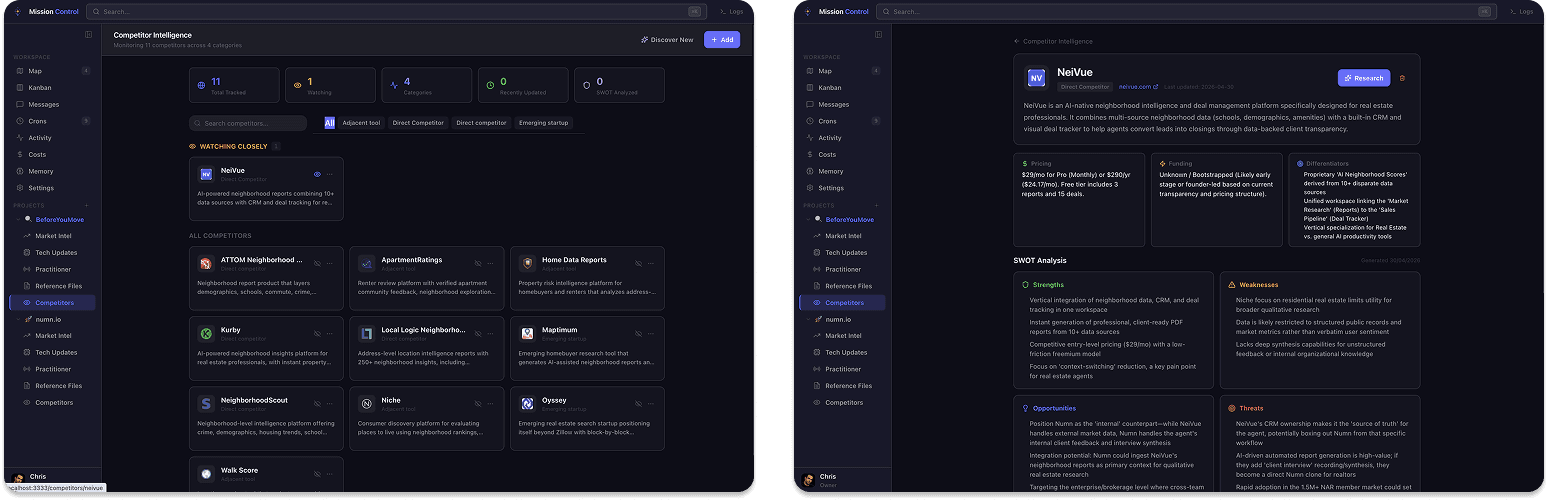
Project workspaces, competitor intelligence, market feeds, memory health checks, security posture, and onboarding.
Status
Live and open source under MIT, with 34 stars, 6 forks, and 34 watchers as of April 29, 2026.
v1.0 shipped publicly on March 9, 2026. A larger v2 upgrade shipped on main with project workspaces, intelligence feeds, visual cron workflows, onboarding, and a more polished operating layer.
This project helped me move from designing product experiences to building full product systems myself, including architecture, interface, data model, operational logic, and release packaging.