How we turned confused intent to confident decisions
Role
Led a team of 5 experience designers, partnering with senior clients to shape strategy, pitch solutions, and build scalable frameworks across industries and the EMEA region.
Industry
Telecommunications
Duration
6 months
Responsibility
Pitching
Strategy Management
Workshop facilitation
Research & Design
Vodafone has a wide range of subscription offerings which were hard to differentiate. That weakened decision-making and slowed growth. I led a six-month growth strategy by aligning Vodafone Executives around a shared problem space and introducing a growth framework that translates intent into confident decisions across all touchpoints.
83%
conversion on “Build your bundle” flow
66%
adoption of Flex package
-63%
Drop-off post customization
Scalable
subscription model extended to digital kiosks
Disclaimer: Confidential information has been omitted or obfuscated. This case reflects my own perspective and does not necessarily represent the views of Vodafone or Ogilvy.
CONTEXT
Customers wanted choice, but couldn’t decide
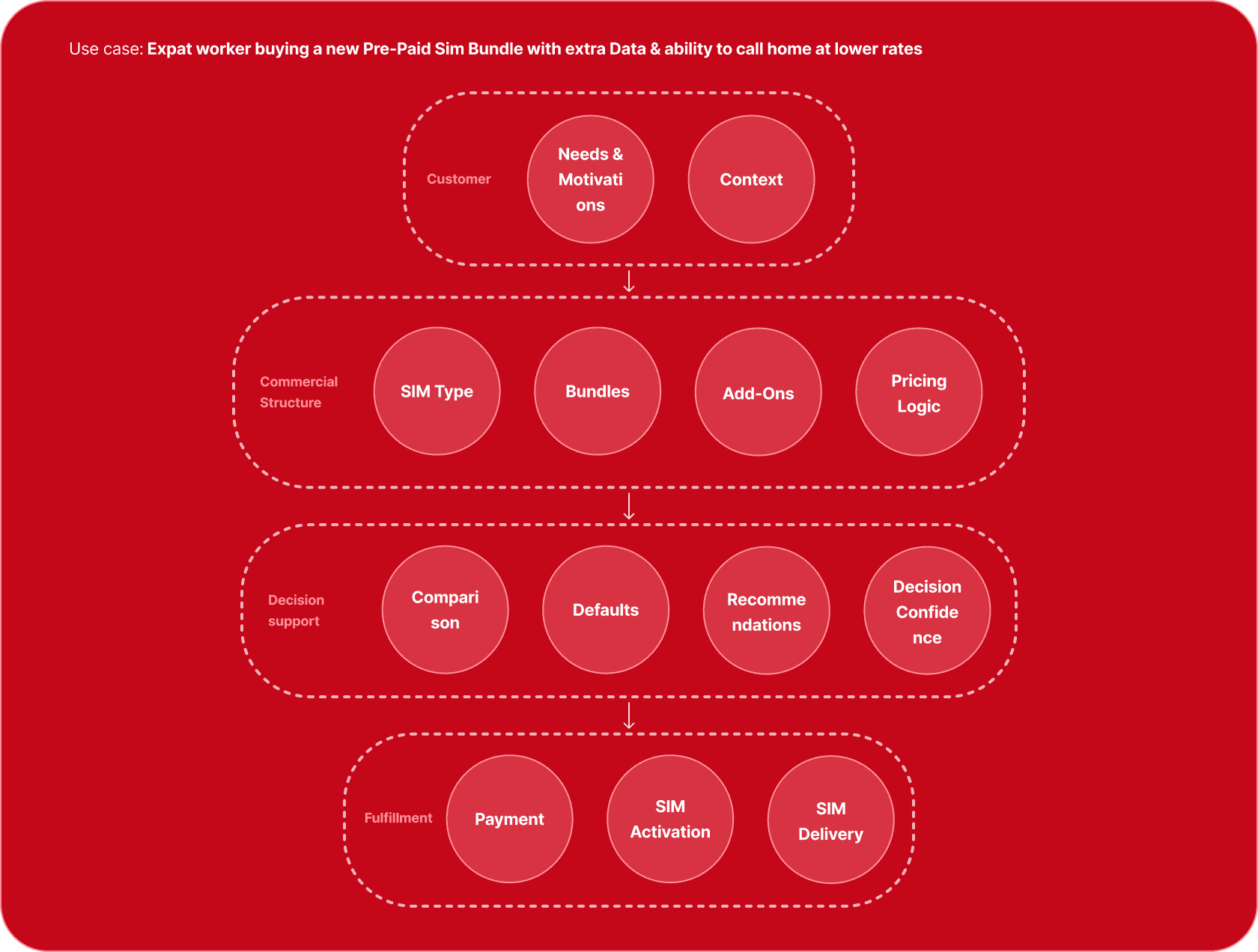
Vodafone had strong commercial offerings: subscriptions, bundles, and add-ons across channels. Yet translating those offerings into confident customer decisions was difficult.
The experience broke down in predictable ways:
Value propositions were hard to compare
Choice overload reduced confidence at the moment of decision
Online and in-store experiences were misaligned
Growth relied heavily on manual sales intervention
The core issue was decision friction.
This work marked the start of a six-month initiative to redesign how customers discover, understand, and commit to Vodafone subscriptions across web, mobile, and physical digital kiosks.
Executive workshop deck
GAP
Intent was lost between strategy and execution
Customers arrived with intent, but the system failed to carry it through. Internally, teams faced a similar problem:
Strategy was clear at the top
Execution varied across channels
Feedback loops were slow and fragmented
As a result, decision-making depended more on sales mediation than on the experience itself.
Growth existed, but it didn’t scale cleanly.
MOVE
Align leadership before designing solutions
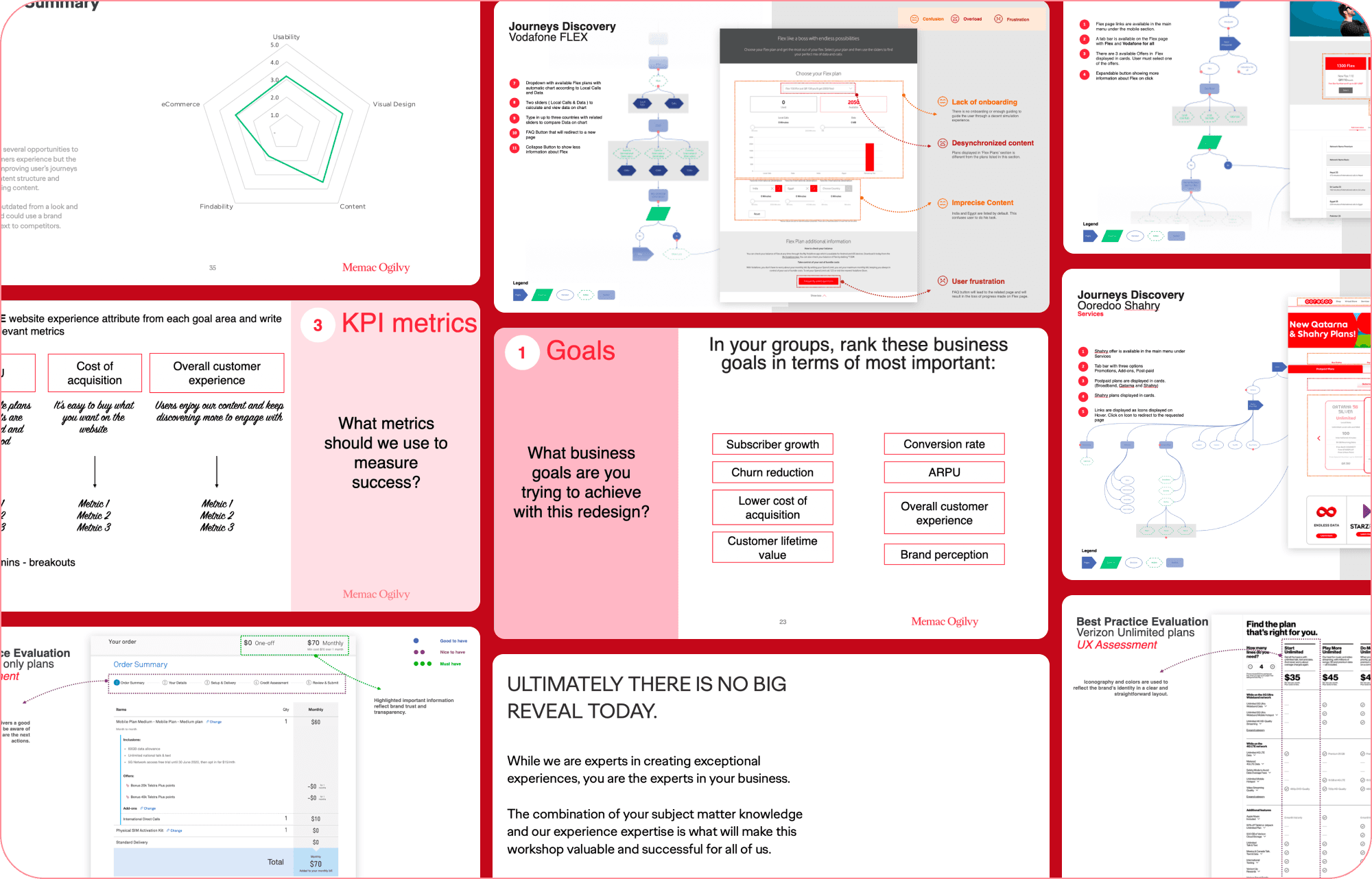
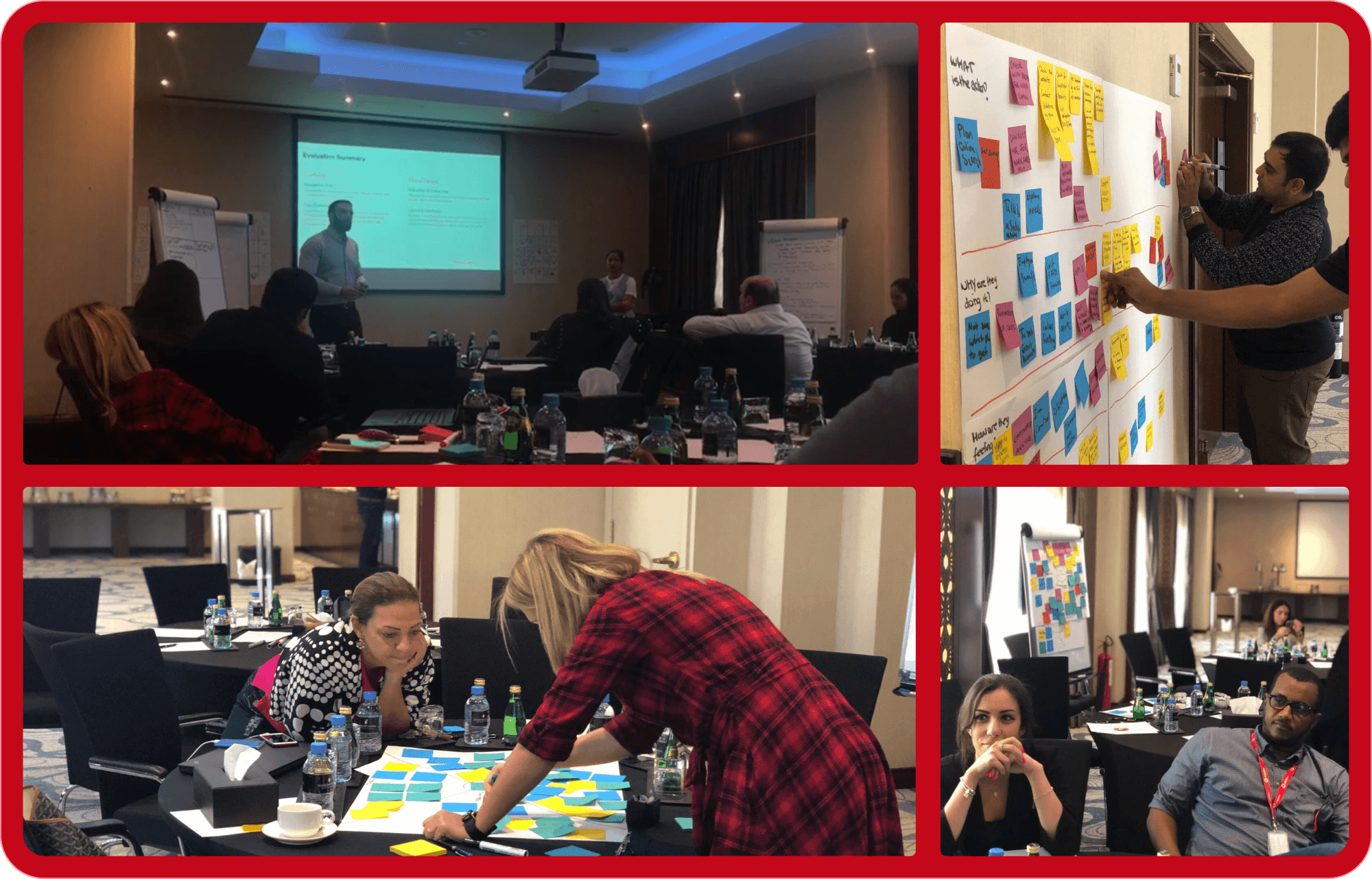
The work began with a three-day executive and management workshop, bringing together leadership, product, marketing, and operations. The goal was alignment before execution. During the workshop, we:
Made strategic tradeoffs explicit
Aligned leadership around a shared growth problem
Identified where intent was breaking down between strategy and execution
This created the conditions for a single, coherent growth direction. And the workshop became the catalyst that unlocked momentum across teams.
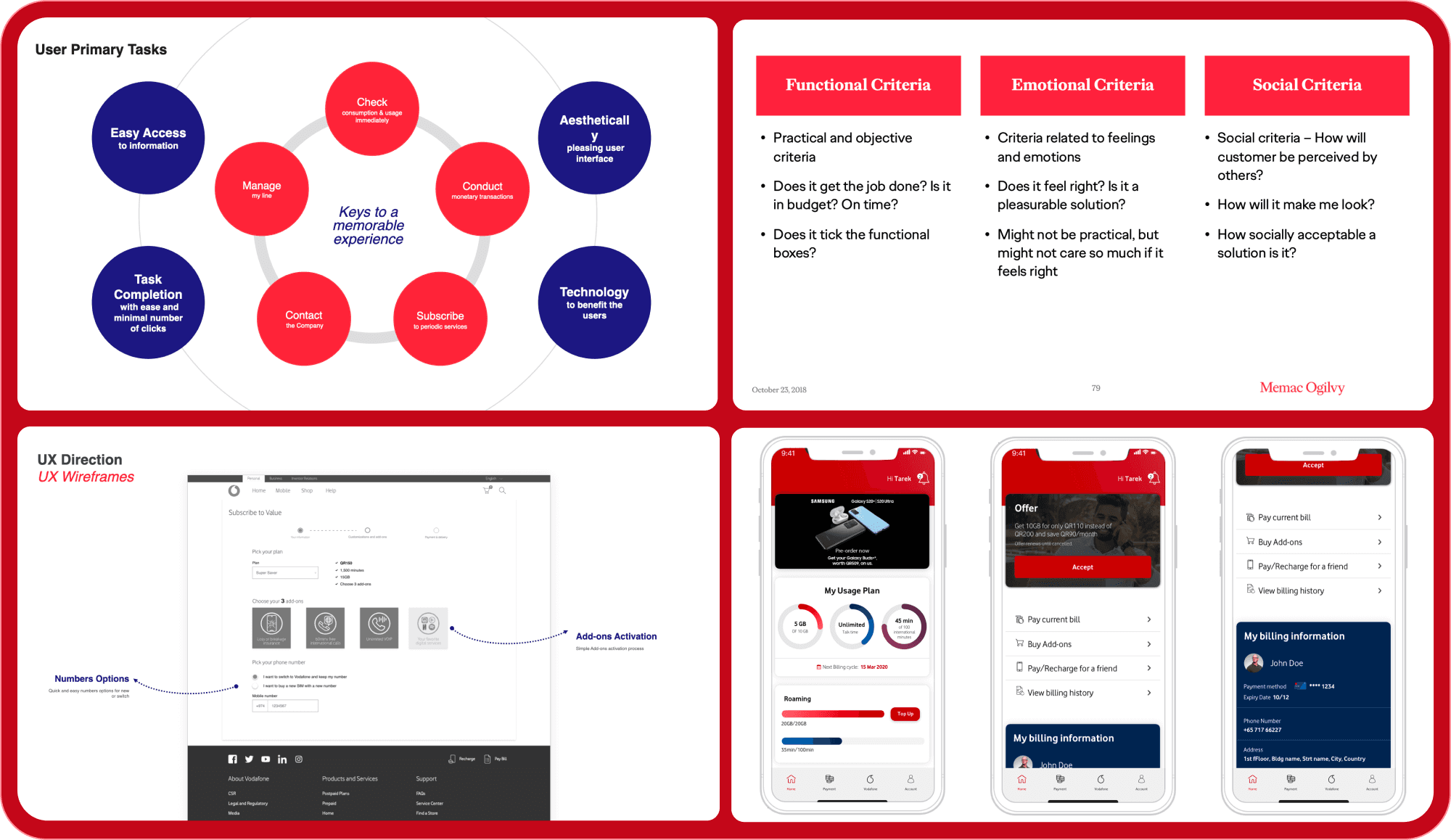
Validated Digital Strategy
SYSTEM
Turning intent into confident decisions, everywhere
We introduced a design-led growth system to align strategy, experience, and execution around a simple but rigorous loop:
Respond to Desire → Curate Offering → Coach Behavior → Automate Execution
The focus was on one question: How do we consistently turn intent into confident decisions, across channels?
AI played a deliberate role in this system:
Helping surface relevant options instead of exhaustive ones
Adapting bundles and recommendations based on observed behavior
Supporting consistent decision logic across digital and physical touchpoints
I deliberately avoided:
Feature-by-feature optimization
Channel-specific fixes
Treating online and offline as separate experiences
This loop became the foundation for redesigning Vodafone’s subscription and bundling mechanism over the following six months.
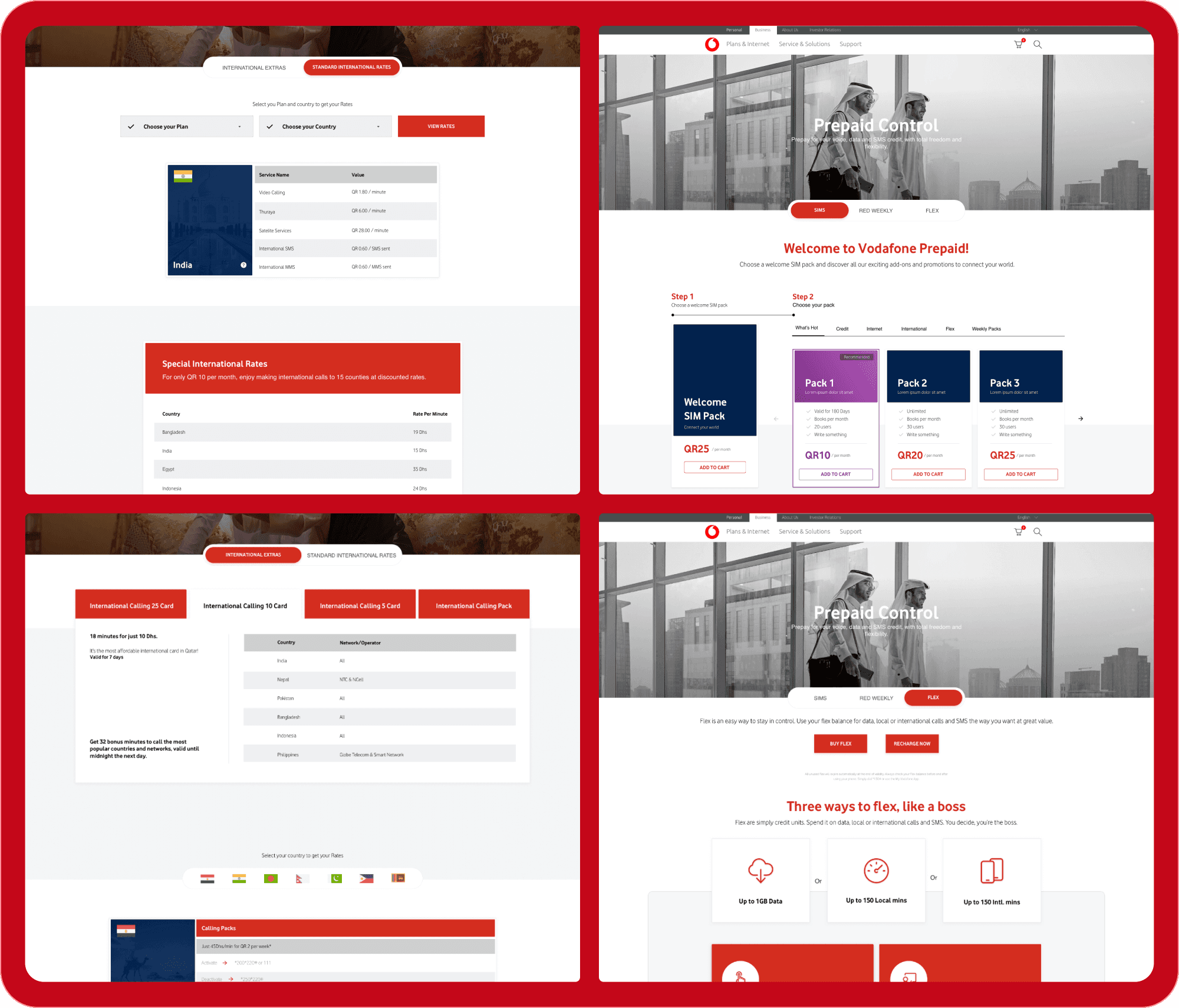
Validated UI (Selecting a pre-paid package)
IMPACT
Confidence replaced mediation, and growth followed
After a few iterations, the impact validated the approach:
83% conversion on the “Build your bundle” flow
+66% increase in adoption of the Flex package after rebranding and platform release
+300% traffic growth on the website following the new experience
The same model was later extended to additional subscription types and in-store digital kiosks.
Operationally, the system reduced reliance on manual sales and support mediation, increased decision confidence, and created a growth model leadership and teams could rally behind.
—
In large organizations, growth stalls when alignment breaks down between strategy, experience, and execution.
By using the workshop as an alignment catalyst, and design as the connective tissue that followed, we aligned decision-makers first, then translated that alignment into systems that scale.
This approach continues to shape how I operate in complex organizations: using design to reduce friction, guide behavior, and turn intent into confident action.