Creating fair shift finding dynamics
Role
Design Lead @ Temper EU
Industry
Human Resources
Responsibiliy
UX Strategy
Product Design
Workshop Facilitation
Team
Senior PM
Senior PrD
2x Front-End Engineers
3x Back-End Engineers
Data Analyst
Platfotms
Web
iOS Native
Android Native
TL;DR
Temper’s core marketplace dynamic was imbalanced: a small group of workers captured most shifts, while new workers churned and clients lost trust. Through deep root-cause analysis and continuous experimentation, we reframed finding & matching around quality, fairness, and signal clarity, improving outcomes without violating strict legal constraints.
12%
increase in successful matches
7%
improvement in worker quality score
47%
adoption of shift tags
Reduced
first-shift friction for new workers
Disclaimer: Confidential information has been omitted or obfuscated. This case reflects my own perspective and does not necessarily represent the views of Temper.
Context
… cooks lie about experience in order to get accepted. Already a few times this summer that a cook, who is payed around 30 euros per hour, could not even cut a cucumber
– Client in NL
Finding shifts & matching workers with clients, are key platform dynamics that are suffering critical imbalance.
Temper’s business model puts a ton of legal restrictions. Temper cannot recommend jobs, prioritize jobs, or prioritize applicants.
Challenges:
80% of shifts filled by 20% of users
94% of new Flex workers found it extremely difficult to land their first shift
Churn has reached 60%
60% of clients are dissatisfied of low quality workers
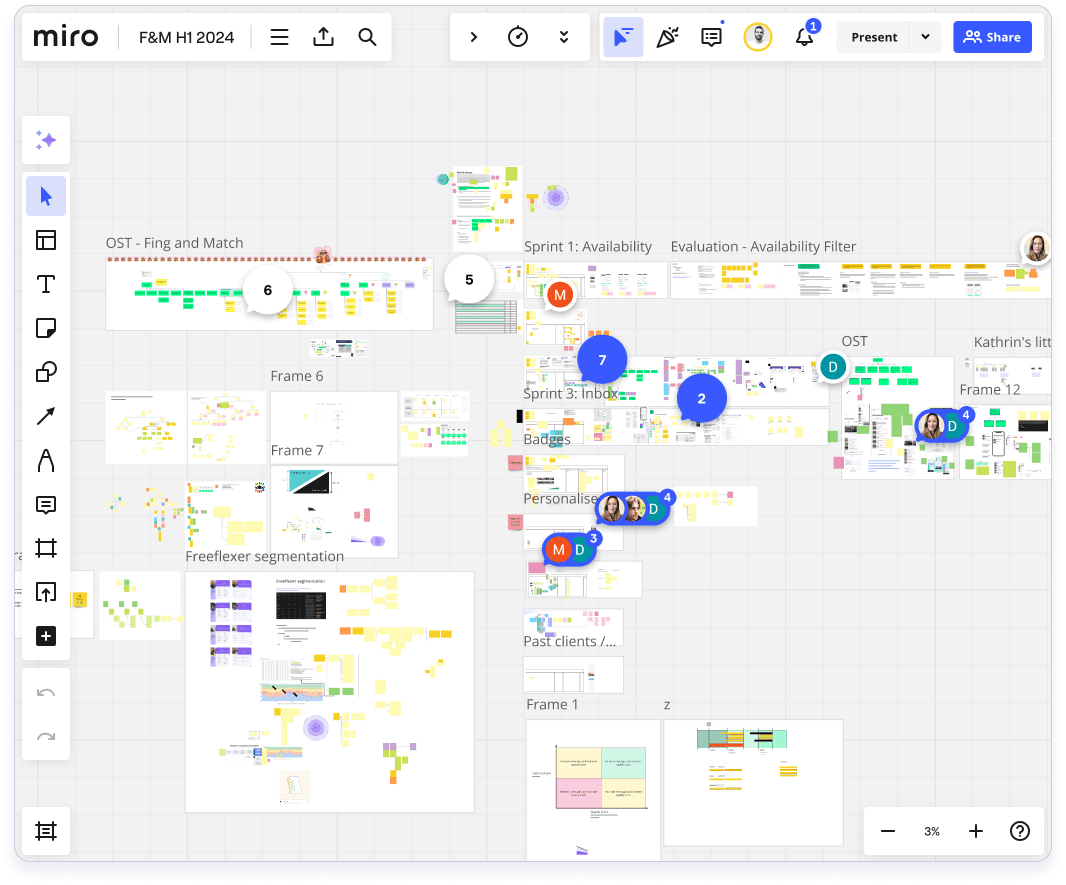
Squad Miro discovery board (Messy af but juicy af)
Outcome:
Improve the shift matching accuracy by 10% to better balance supply and demand in the marketplace, enhancing both worker and client satisfaction.
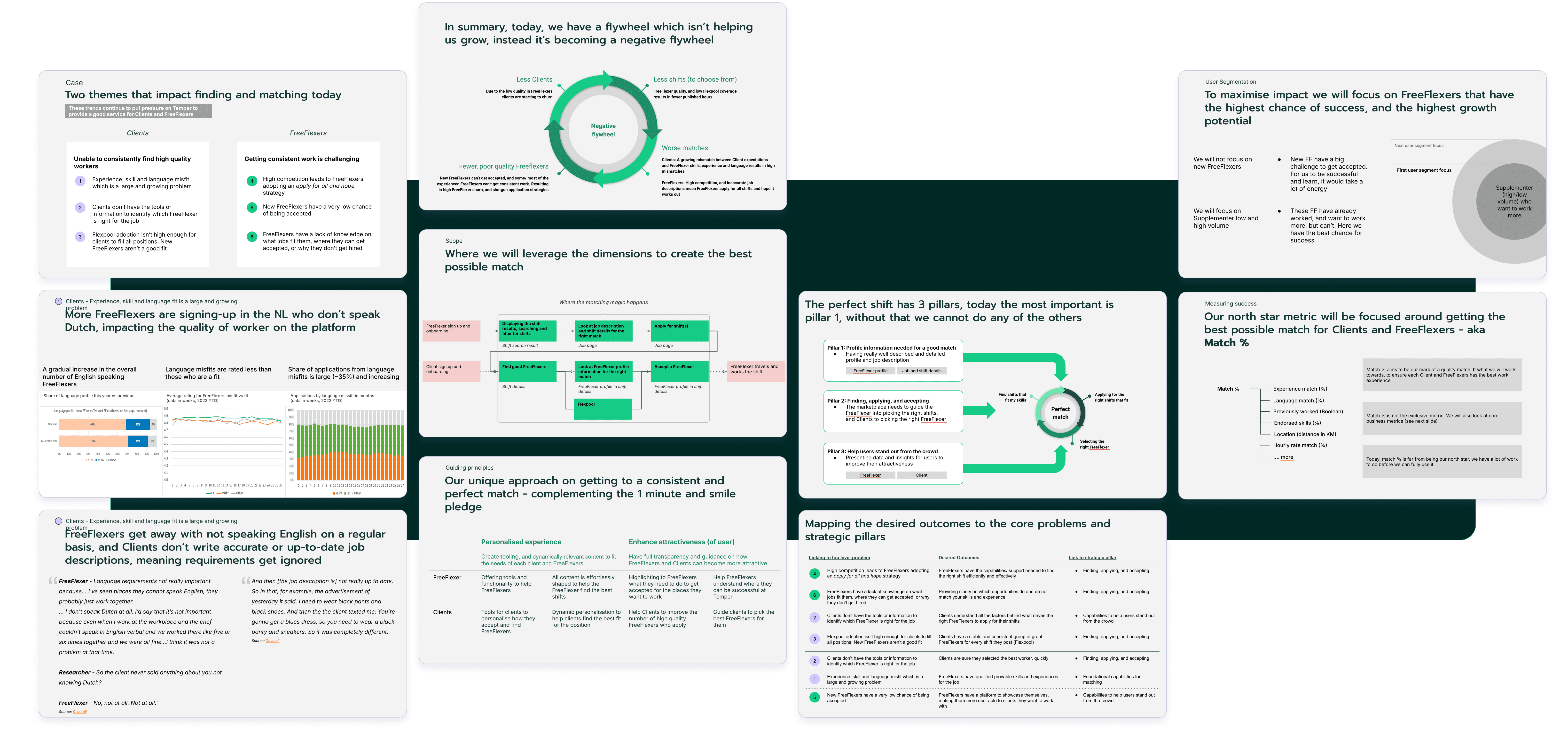
Squad findings after first set of experiments with updates on Strategy
Foundation
We kicked off the Quarter with a cross squad Design sprint, generating +30 potential solutions.
We brought everyone up to speed on the current state, and I kicked-off facilitation for a group of 18 Engineers, Analysts, Researchers…
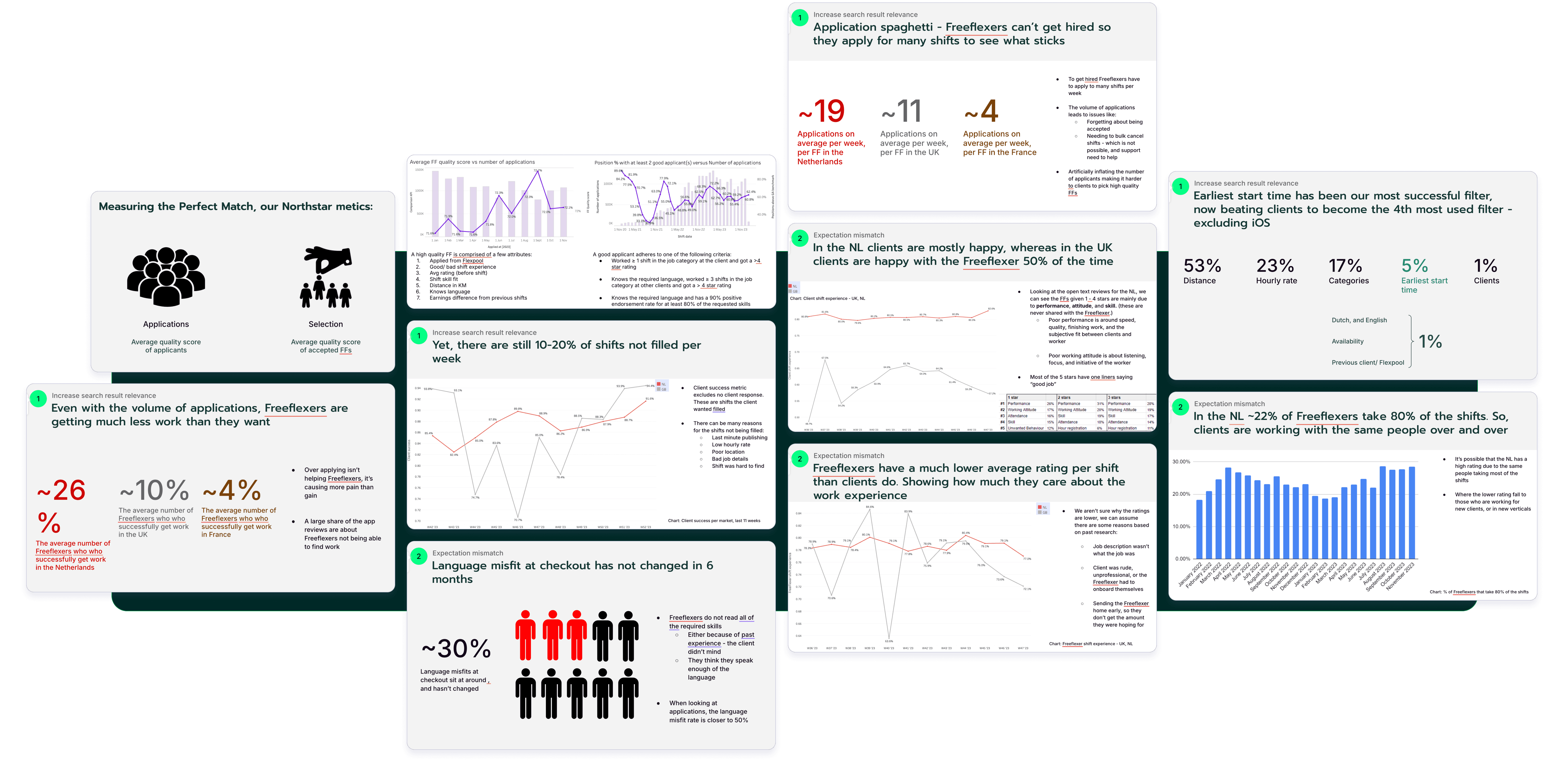
Looking at sentiment
We also discussed the key attributes that defined a high-quality Flex worker (FF)
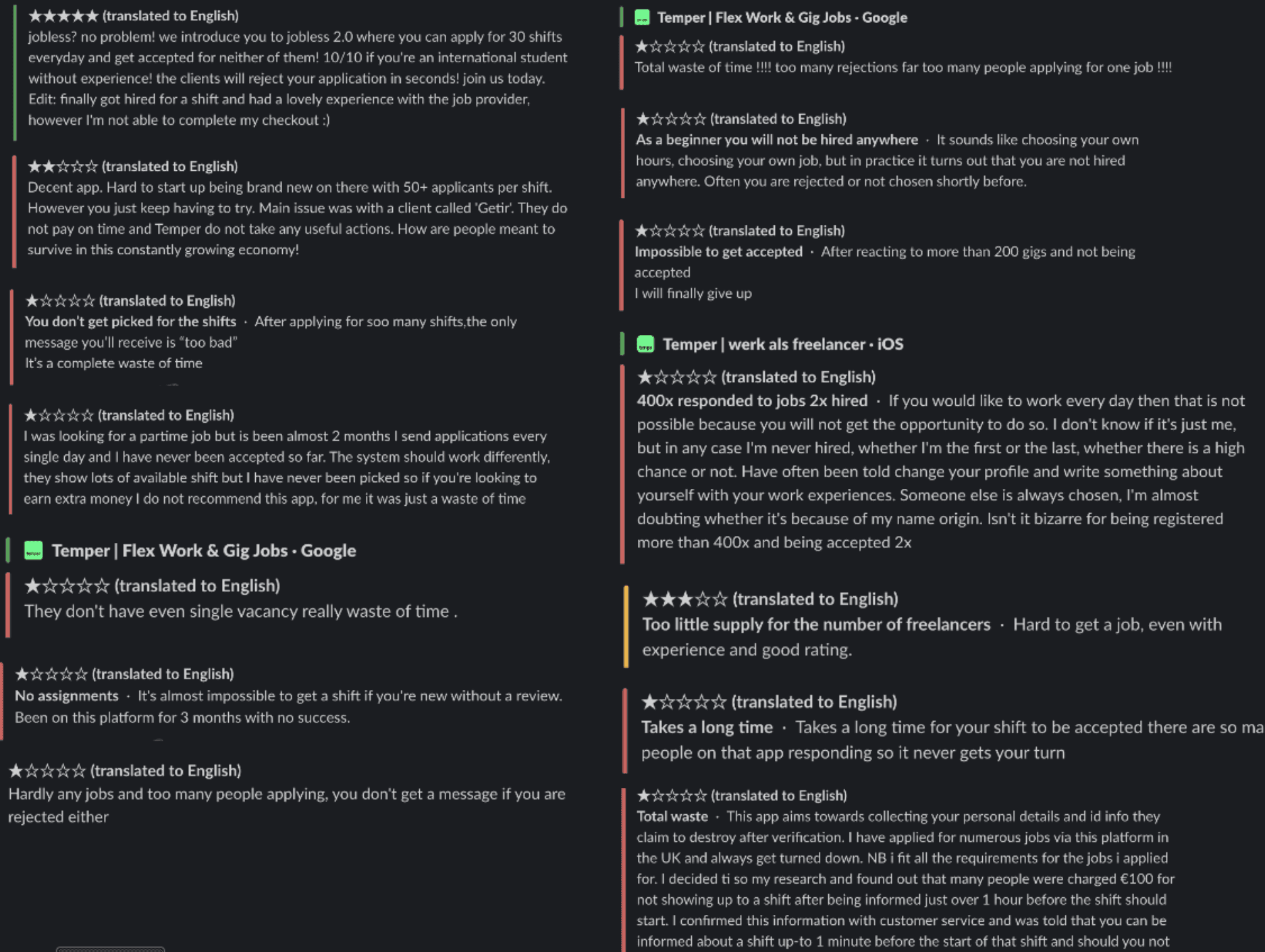
Reviews related to Finding shifts

Marco PM presenting findings & strategy to kick off quarterly design sprint
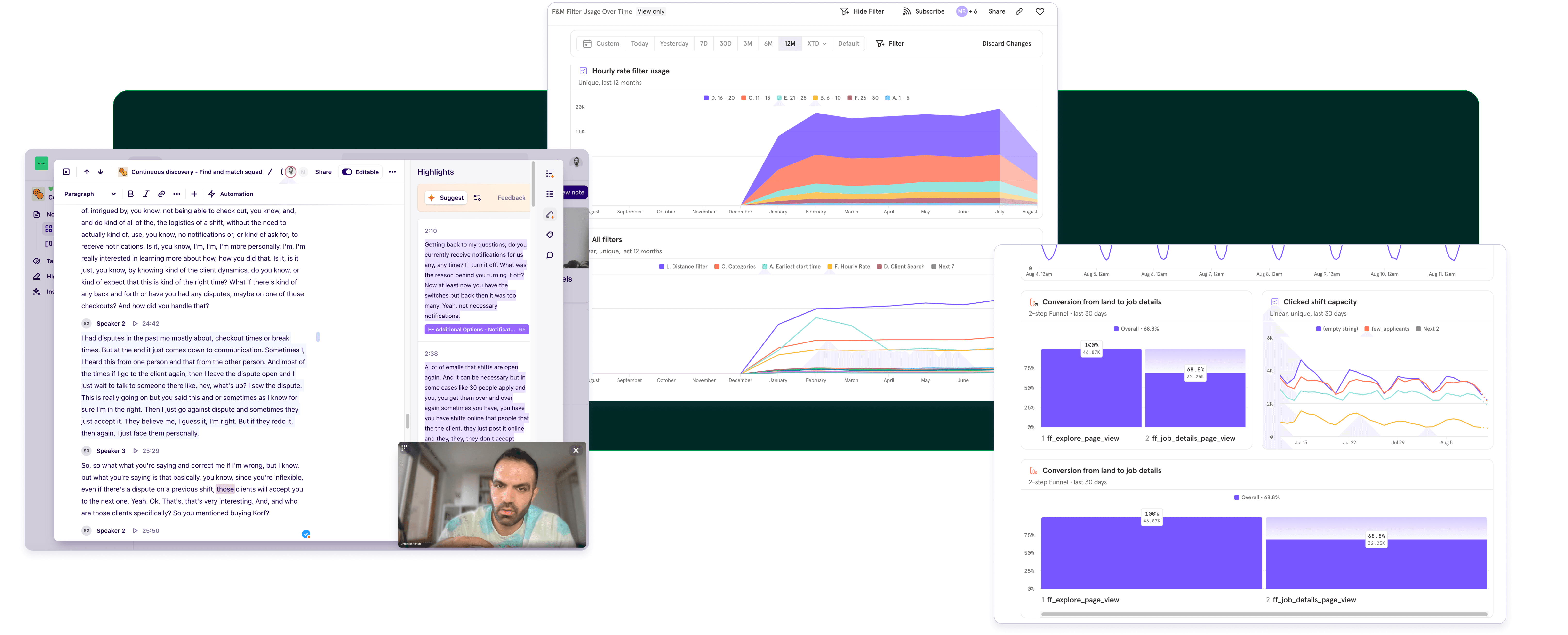
Diving into data
Analysis of vast array of metrics:
Average quality score
Application frequency / success rates
Skill/Attitude preference
Avg N of applications per worker per week
Work experience misfit rate…
Delivery
We launched 8 experiments per quarter, with 4 iterations, on 3 platforms
Experiments were planned across 2 main flows: Finding a shift, and applying to a shift. Here are a few…
Shift tags
Incorporated tags on the homepage that helped steer Flex workers towards the right shift that suit them.
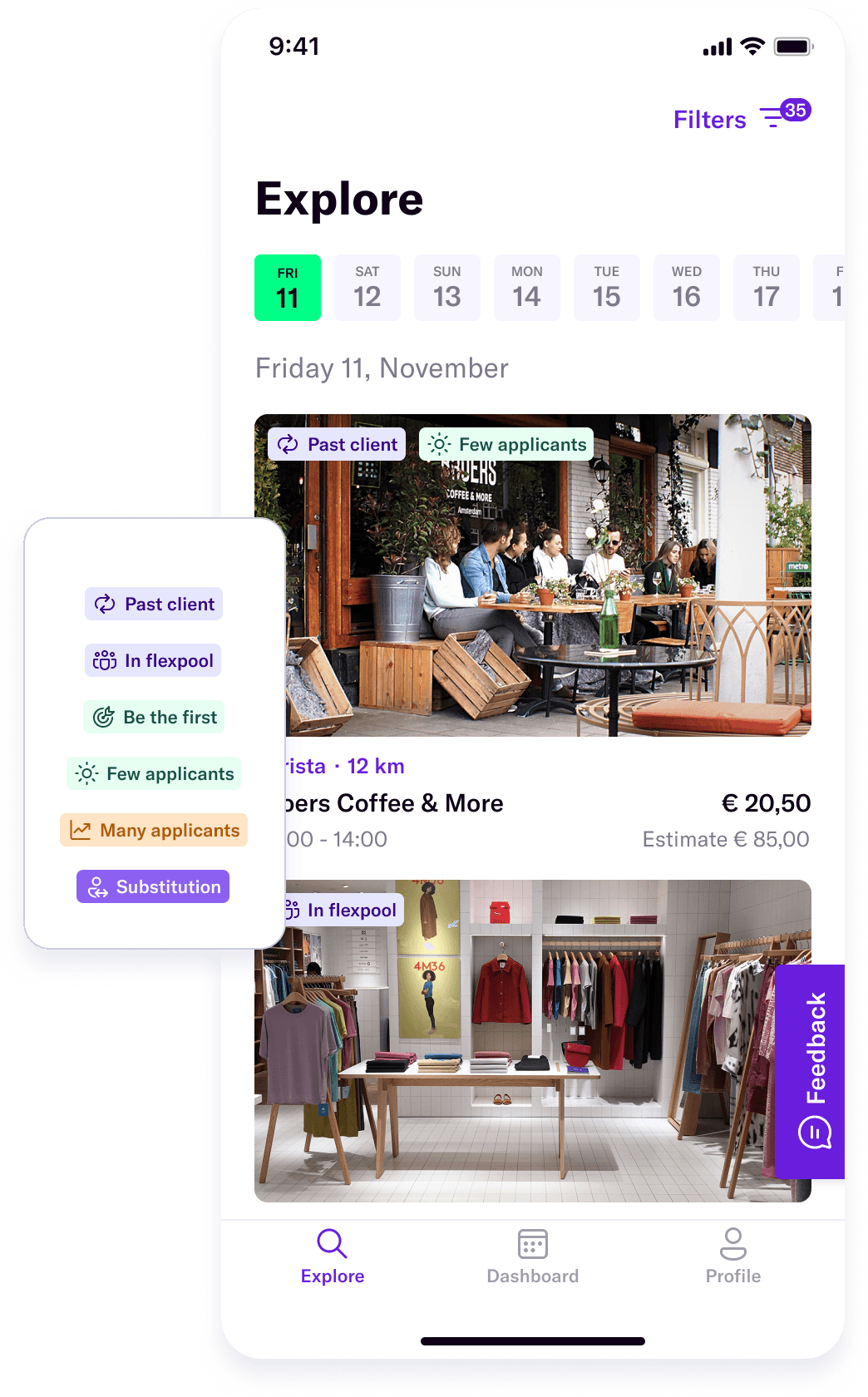
First A/B Test
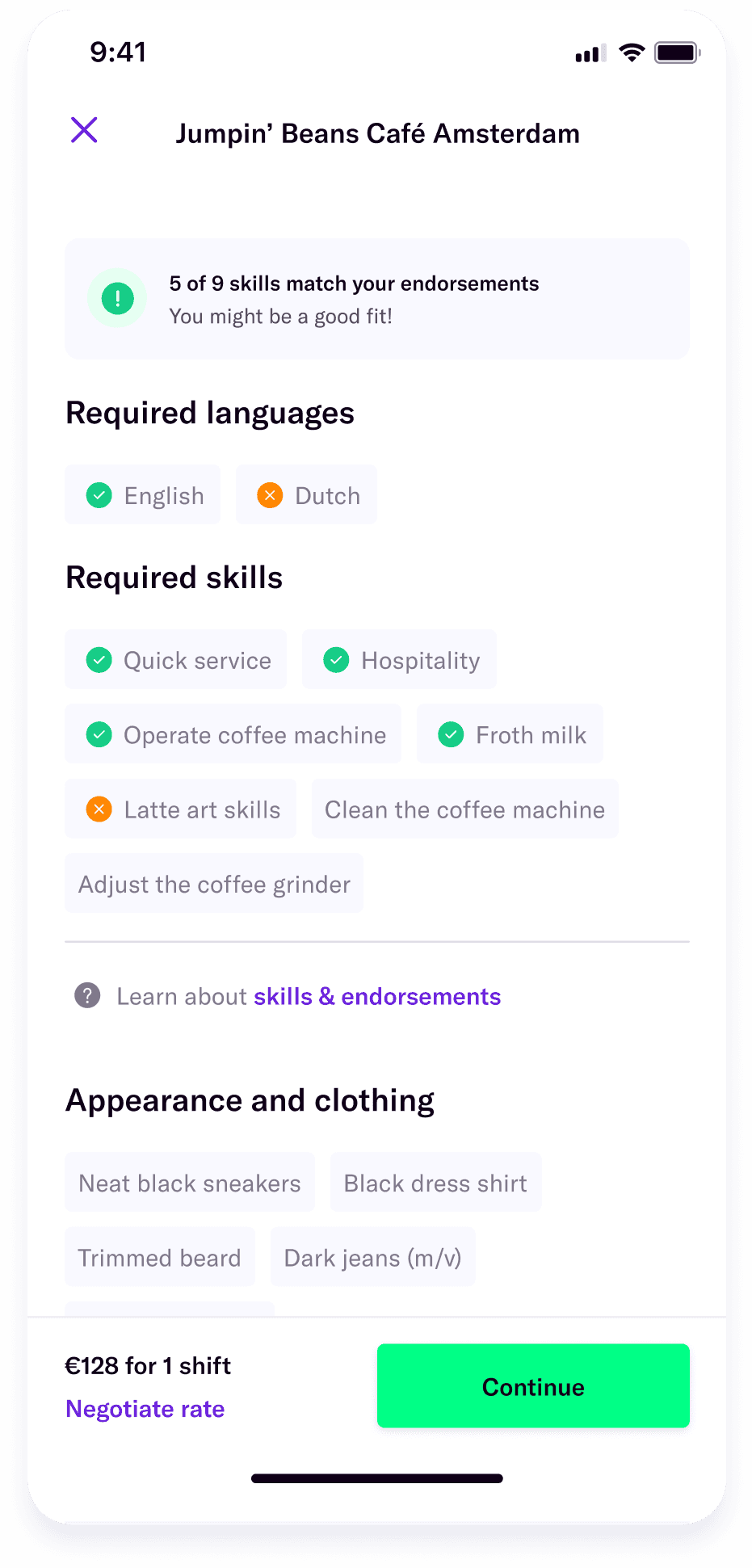
Skill matching on job pages
Show Flex workers if their skills match the skills required by the client, influencing their decision to apply.
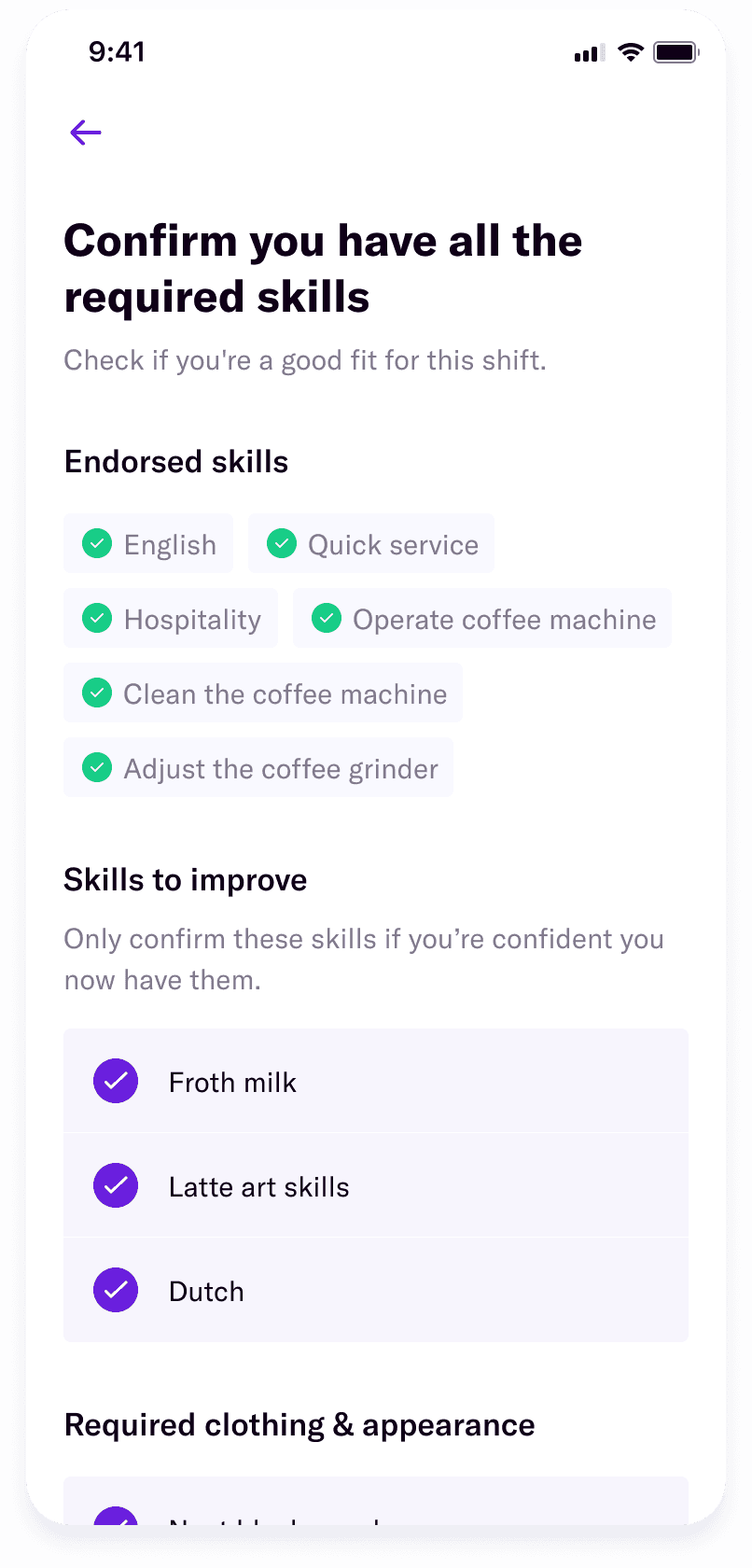
B. Skill matching on application pages
We also tried it on the application page which lead to 12% higher drop-off rate, passing the test.
Saved search multivariate test
Enable Flex workers to Save their different search filters and automatically load them when needed.
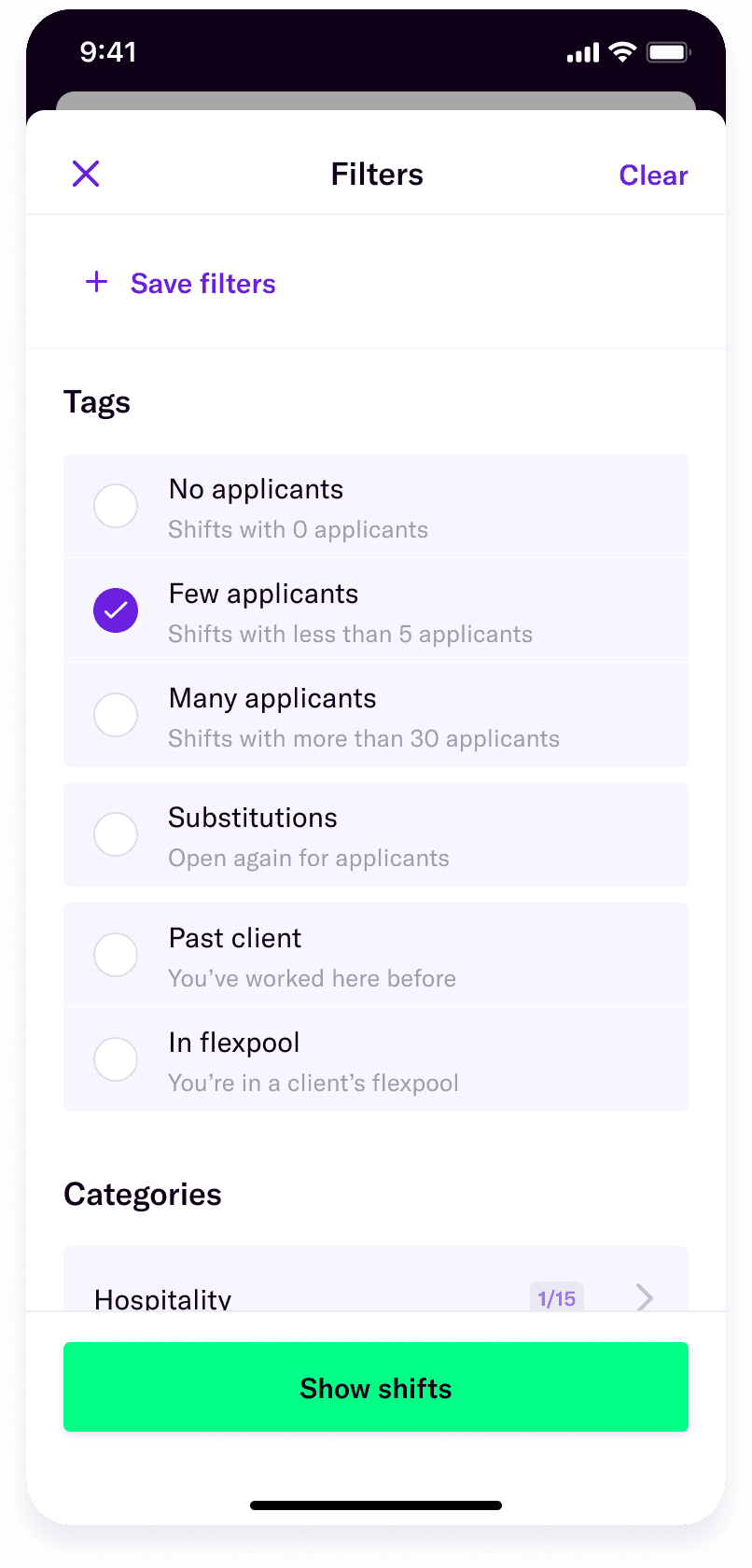
Top alignment / Quick saved search select - 33% adoption
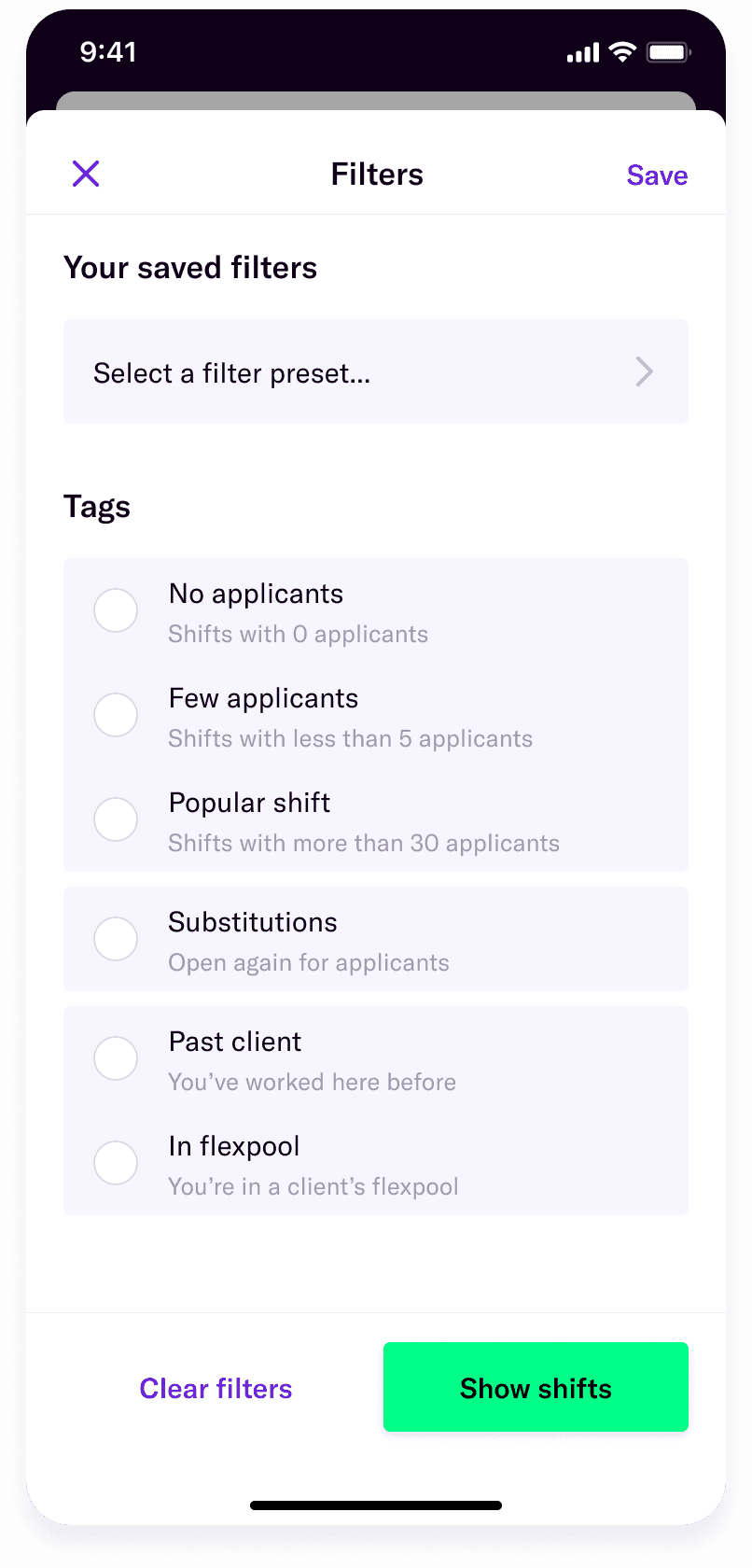
Top alignment / Saves search overview - 9% adoption
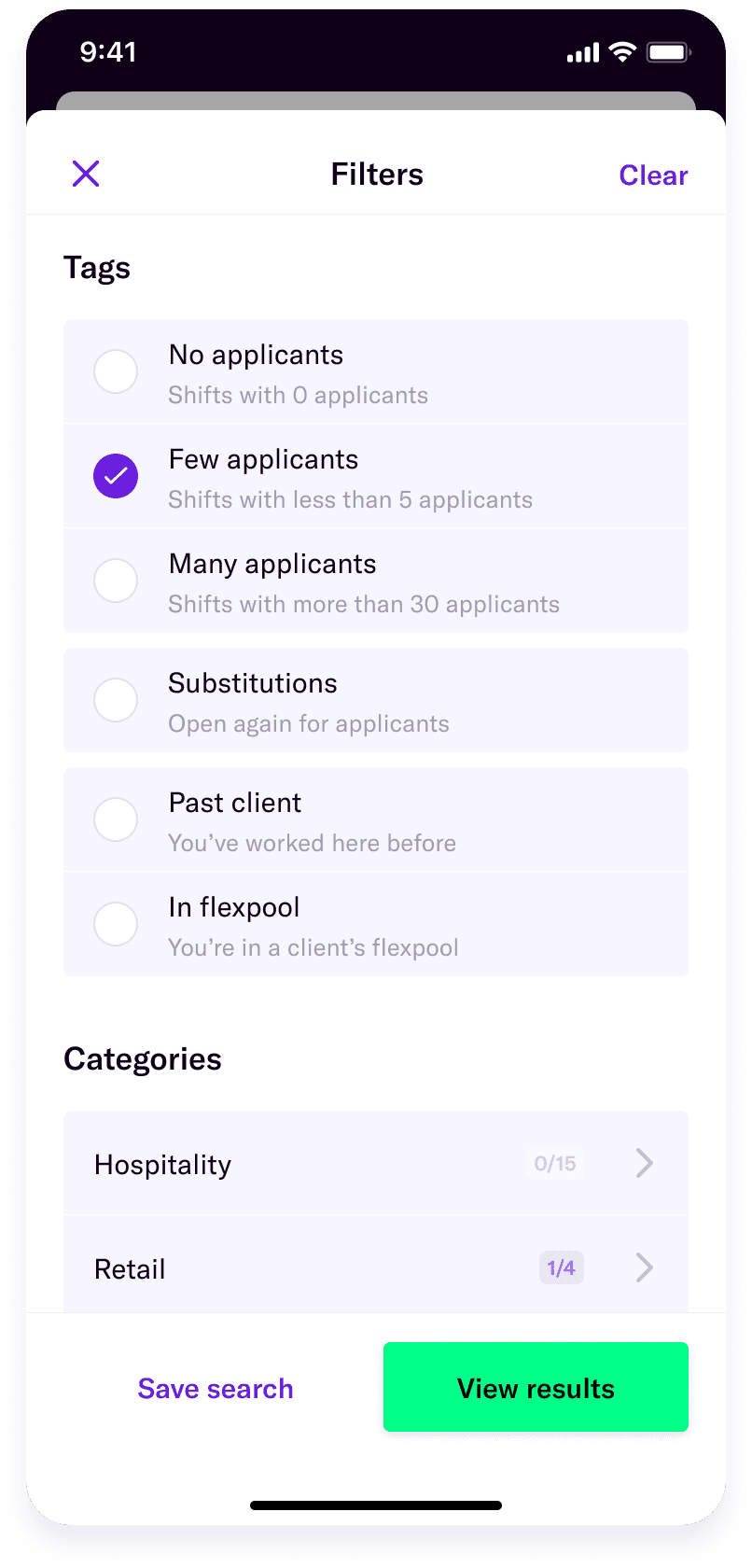
Footer placement - 35% adoption
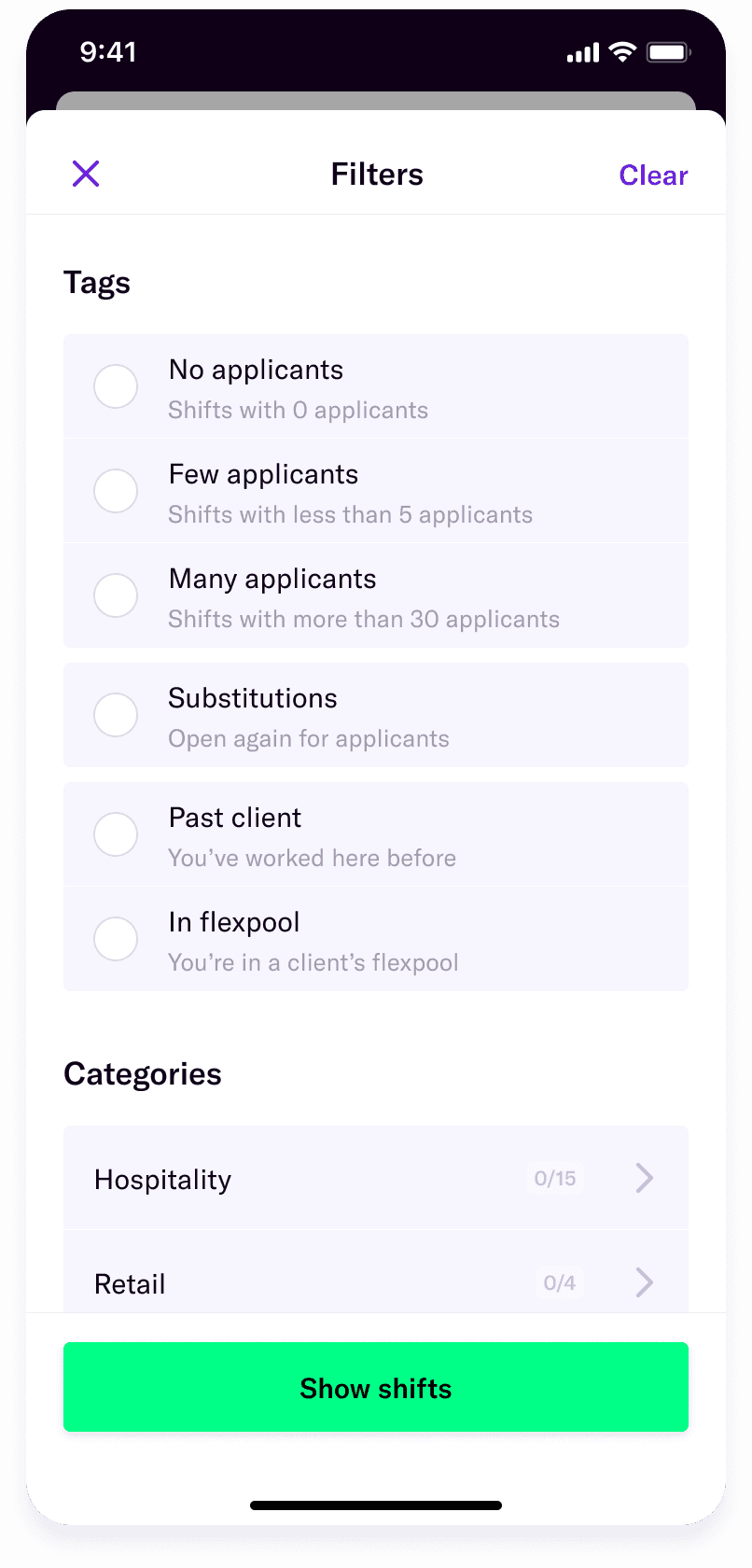
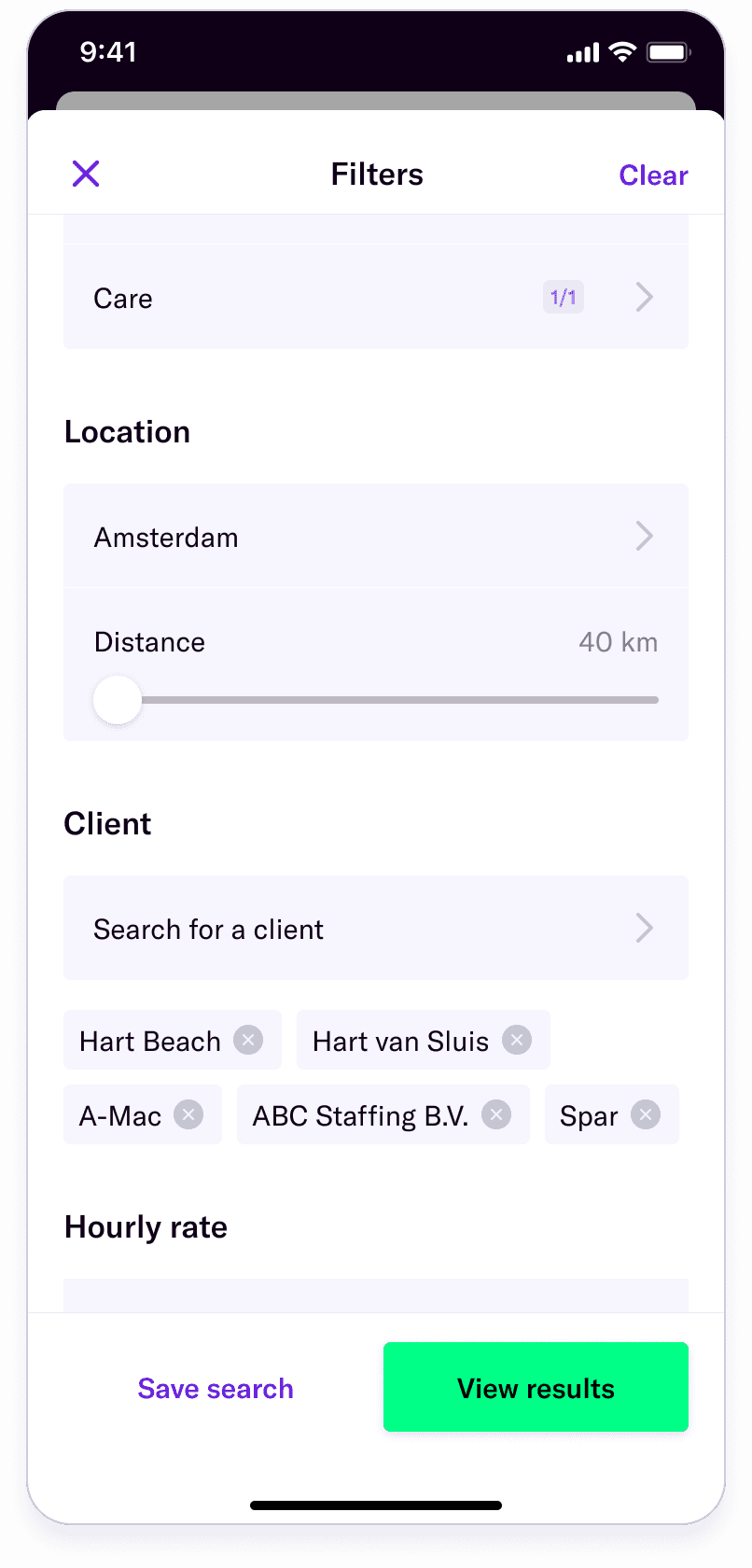
Enhanced filters
Incorporation of new filters (such as availability and Flexpool participation) to improve the accuracy of job matching.
Video application
Offers Flex workers the ability to record a video with a few pre-defined questions to give clients a glimpse of

Impact
While making noticeable impact, we identified a plateau in success rates for new Flex workers.
We later on collaborated with Product marketing to target compelling profiles, and the activation squad to push more education and skill validation while onboarding.
+7% in quality score
target to reach 12%
47% adoption rate
for Shift tag filters
+12% success rate
closer to fair distribution
Next steps & Learnings
We set a new strategy for Finding & Matching, focusing on quality, and experienced Flex Workers.
And along the way, I learned a lot..
Not all challenges can be solved.
Sometimes, even if we try, a solution can’t be found, and that’s okay. Dealing with compromise is one way to continue, but the right solutions requires sacrifice.
Momentum can never be ignored.
In a fast-paced environment, it’s very hard not to feel tired and sometimes disassociated.
I have a responsibility ensuring momentum is maintained by designing more meaningful moments.
Breaking Temper’s plateau requires sacrifice.
Temper’s legal positioning in the labor market creates a set of boundaries that limit the platform’s growth.
In order to grow, Temper has to consider strategic business model tweaks, or a complete shift.