Revamping Worker Onboarding Flow
Role
Design Lead @ Temper EU
Industry
Human Resources
Responsibiliy
UX Strategy
User Research
Product Design
Design Management
Team
Senior PM
Senior PrD
2x Front-End Engineers
3x Back-End Engineers
Data Analyst
iOS Engineer
Android Engineer
Engineering Manager
TL;DR
Temper’s worker onboarding was legally complex, slow, and leaky. By redesigning onboarding as a flexible, educational journey instead of a single gate, we reduced drop-off, accelerated first shifts, and set a new industry benchmark for compliant gig onboarding.
42%
completed registration
15%
completed onboarding
-4%
drop-off before ID validation reduced from 21% > 17%
Understanding
of legal, financial, and freelance responsibilities
Disclaimer: Confidential information has been omitted or obfuscated. This case reflects my own perspective and does not necessarily represent the views of Temper.
Context
The lengthy and complex registration process for a compliant and legal Flex worker was a blocker.
A Flex worker is not registered before making sure they have a valid id, vat-id, and many more details.
Challenge
21% drop-off before ID validation
43% drop-off before first application
We discovered that a Temper Flex Worker is not fully onboarded before completing their 3rd shift.
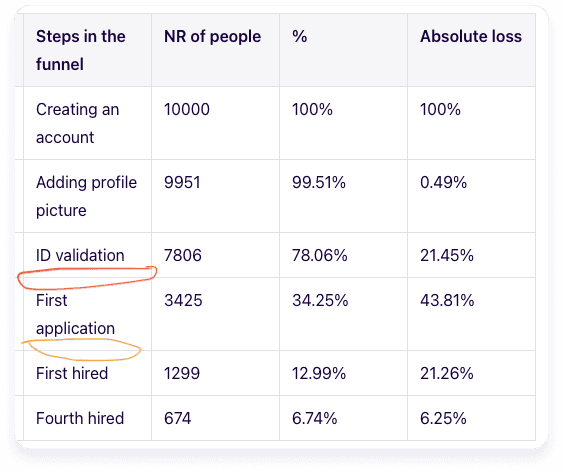
55% of total users who complete registration do not fully onboard
80% of churned users do it due to a lack of platform understanding
Outcome
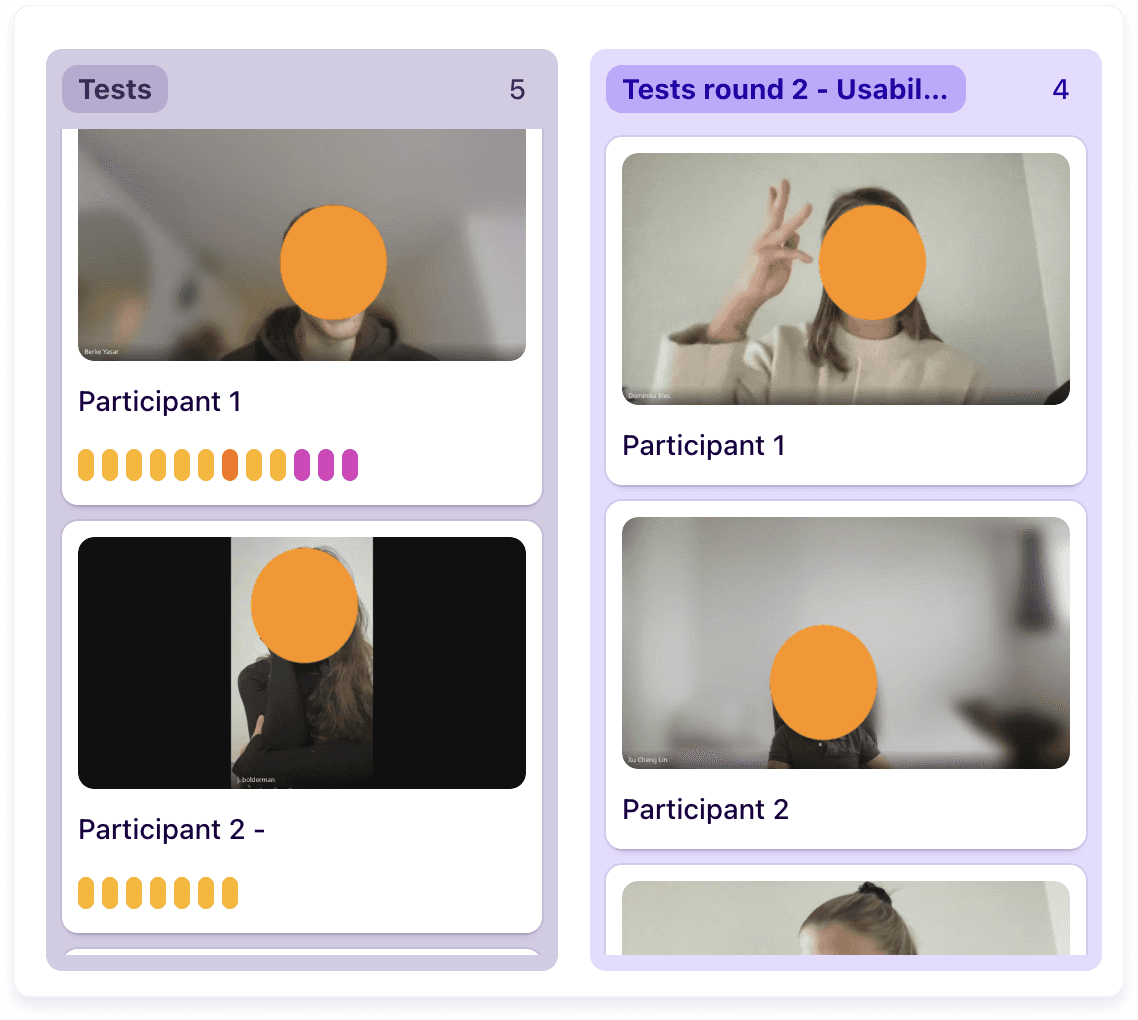
Create a flexible, decentralised onboarding process that educates users at every step, ensuring they understand the responsibilities and benefits of using Temper.
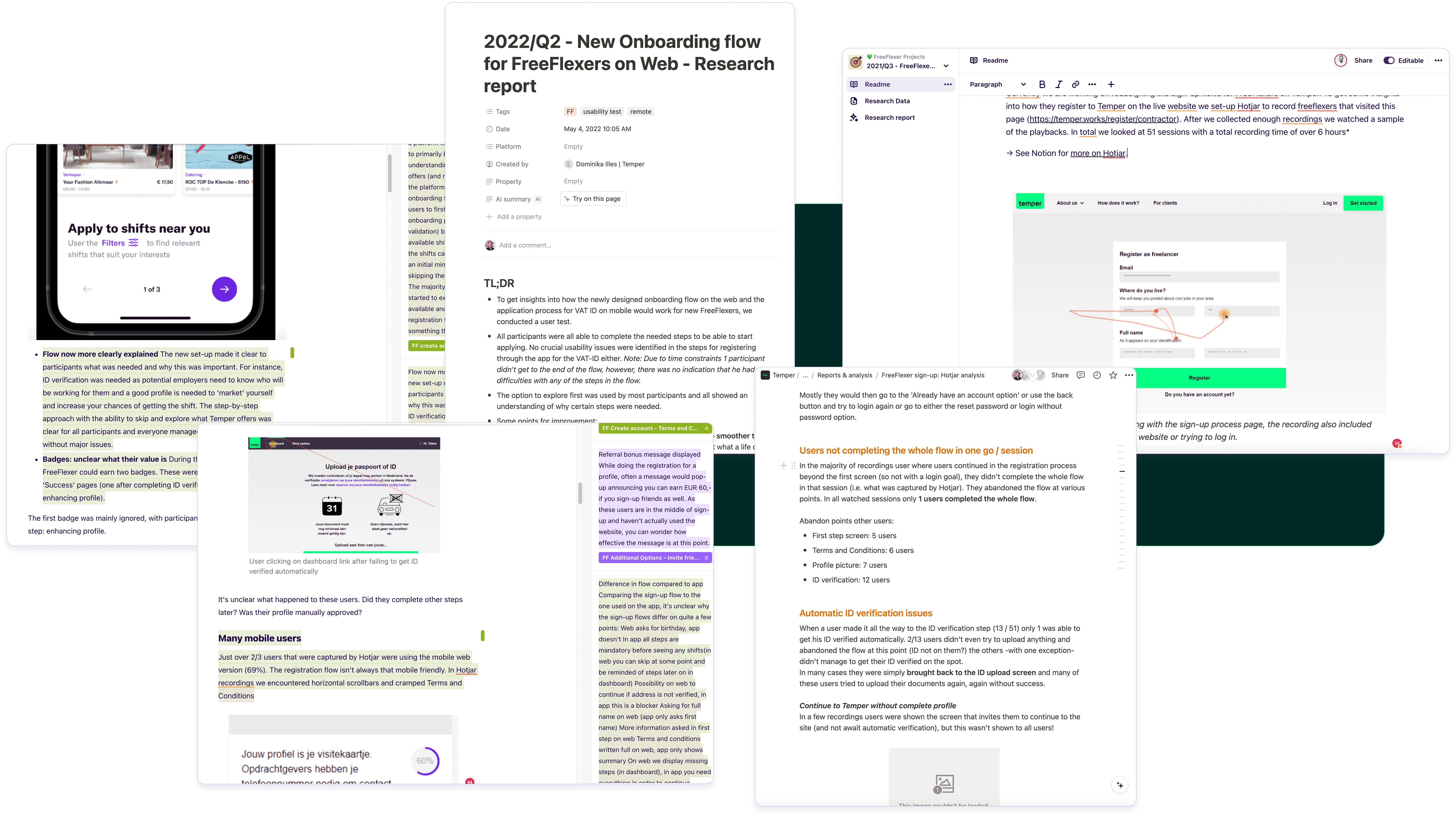
User interviews / Usability tests / Hotjar analysis
Foundation
We anchored our UX vision on flexibility, decentralisation, and education.
We brought everyone up to speed on the current state, and I kicked-off facilitation for a group of 18 Engineers, Analysts, Researchers…
Flexibility at first
We allow users to explore the platform before fully committing.
Decentralised Onboarding
Smaller, manageable onboarding steps make engaging experiences.
Continuous Education
Freelancing is complicated. it’s not only about working, but also understanding.
Delivery
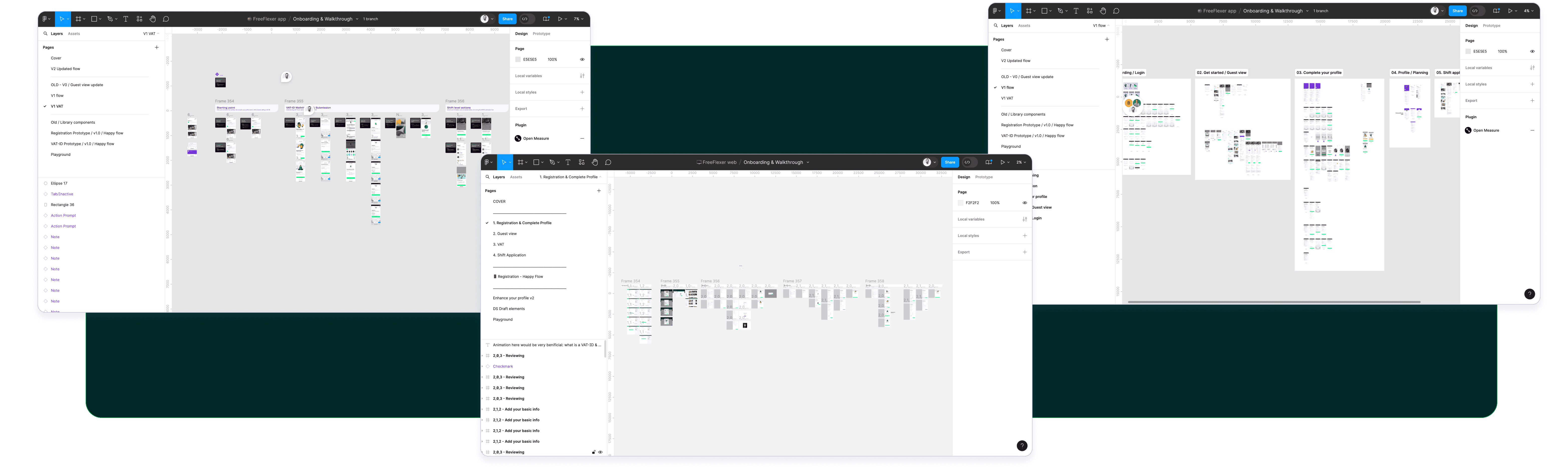
We set a vision for the Onboarding experience and kicked off rounds of small experiments and big releases!
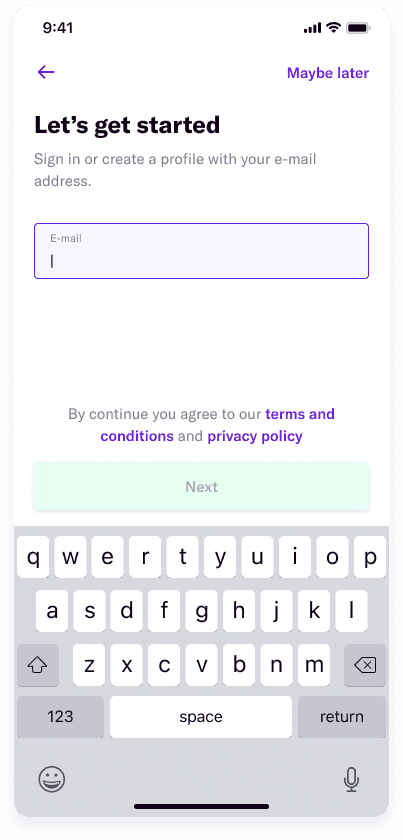
Maybe later was a big hit
The first experiment was particularly well-received, reducing drop-off before ID validation to 17%, and 19% drop-off before first application.
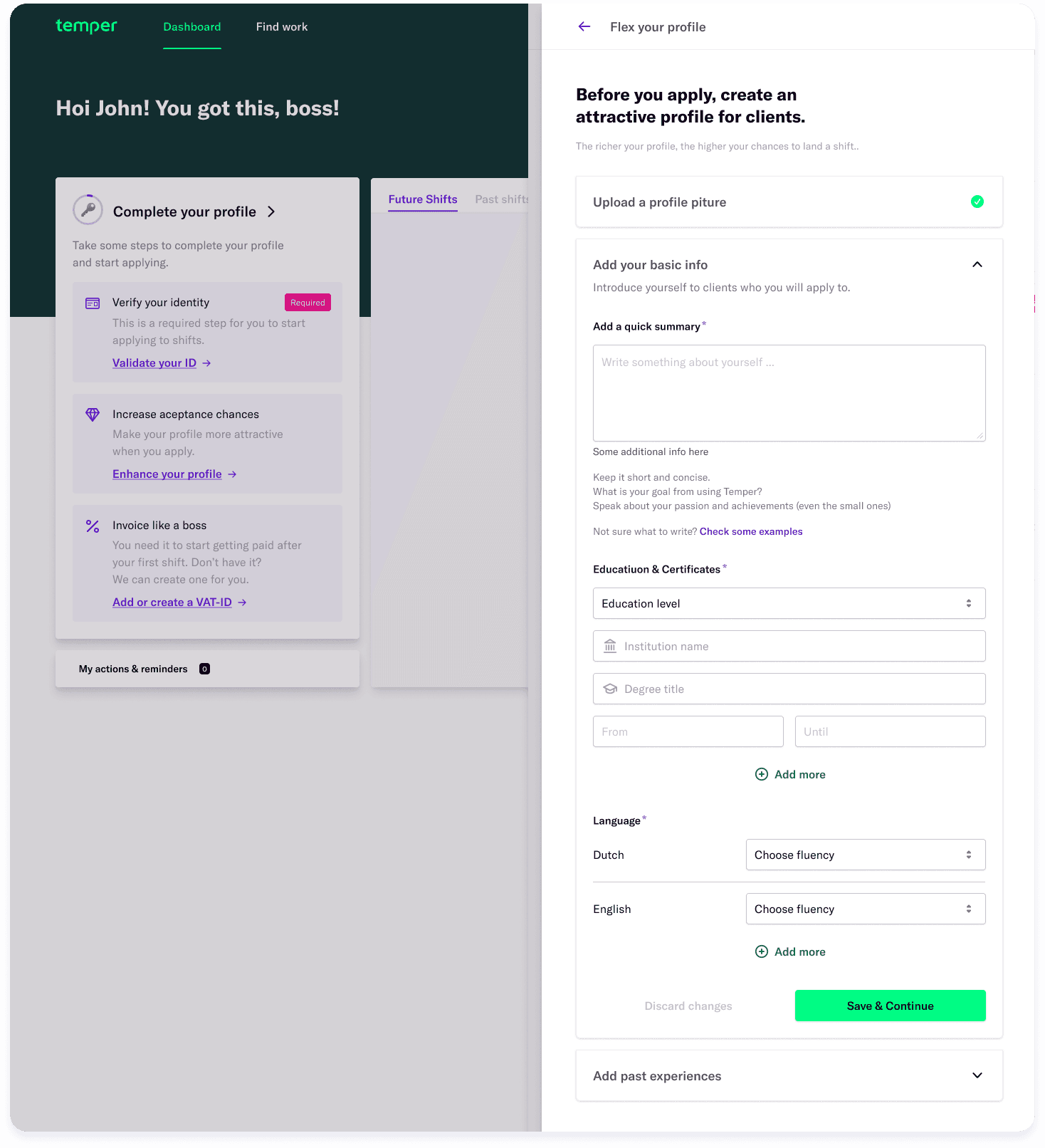
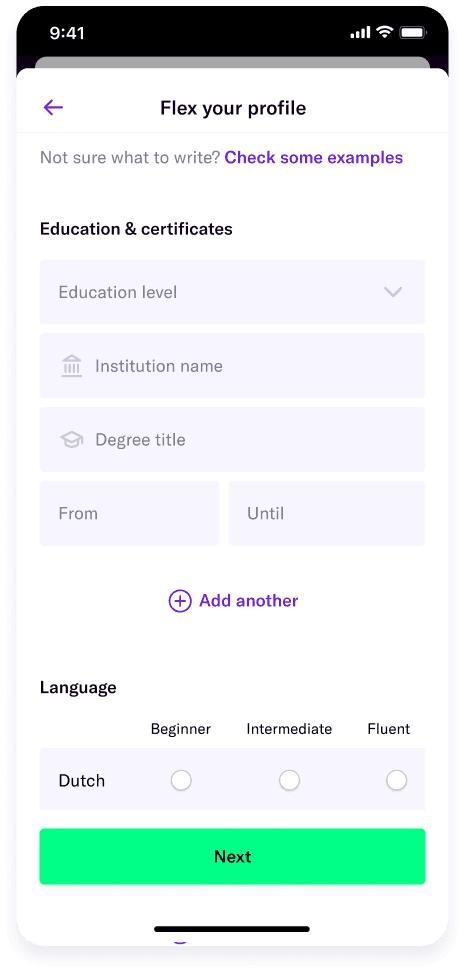
Flex your profile came next
The second necessary step was splitting the registration process into tangible bites. Complete profile, Flex your profile, and Check legalities
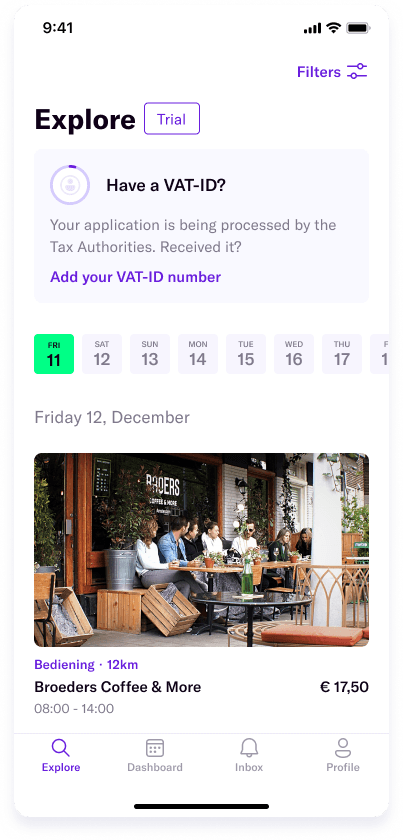
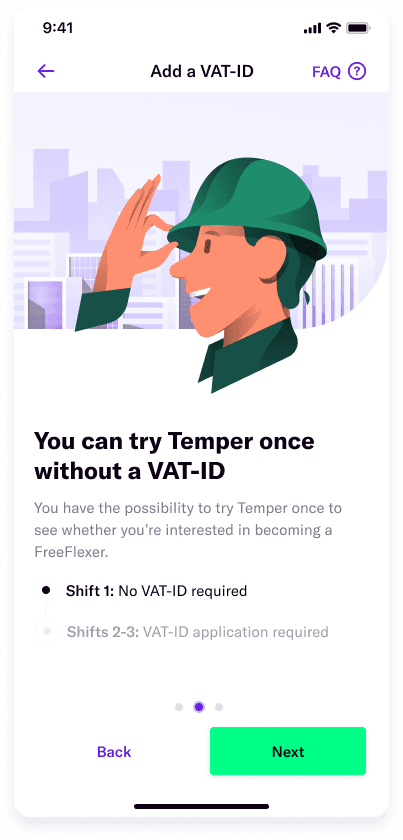
In parallel with Temper Trial
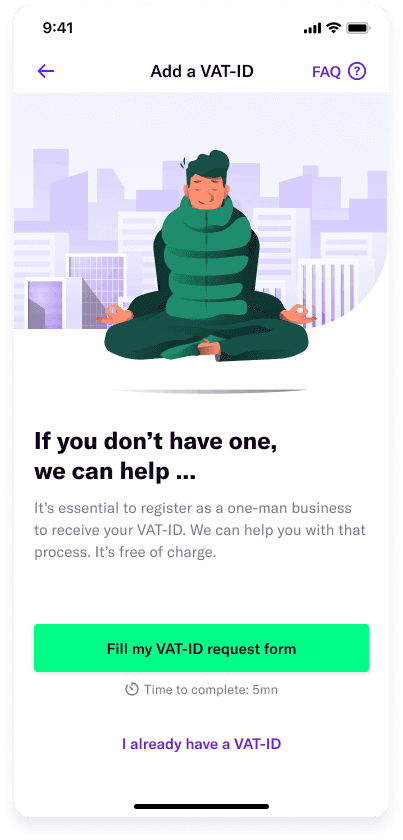
Users who have proven to be eligible to work were offered a chance to work and get paid for 1 shift before requiring a valid VAT ID.
Language came next
We made it easier to share language proficiencies, and clearer for the Client.
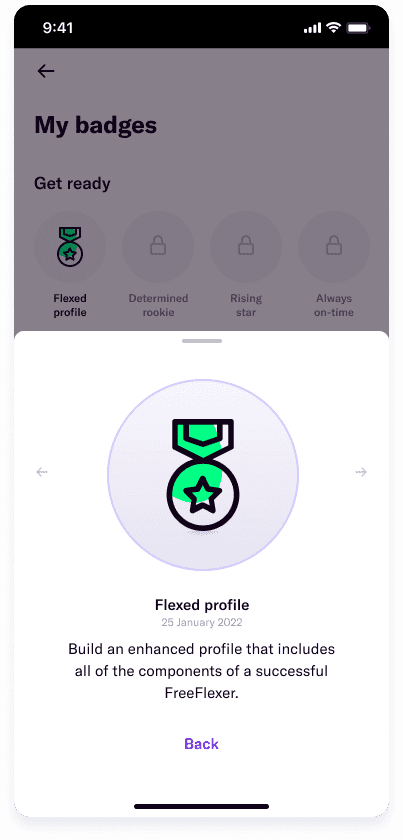
Badges did not make it through
Although the tests were great on rewarding users with achievement badges, we decided to park the release due to technical complexity with the growing scope.
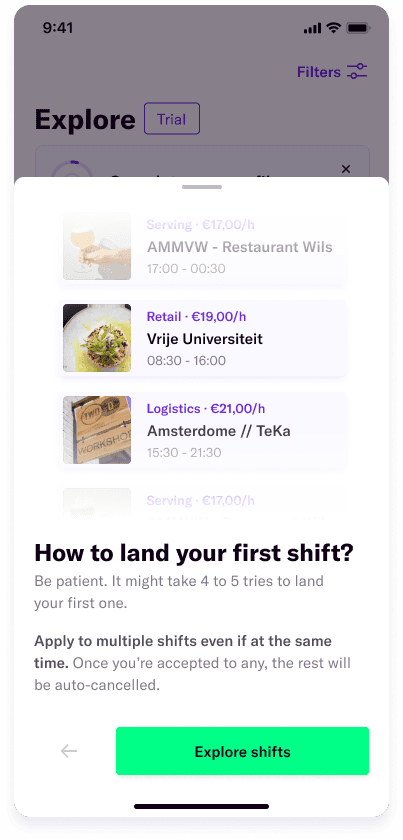
We enabled continuous education
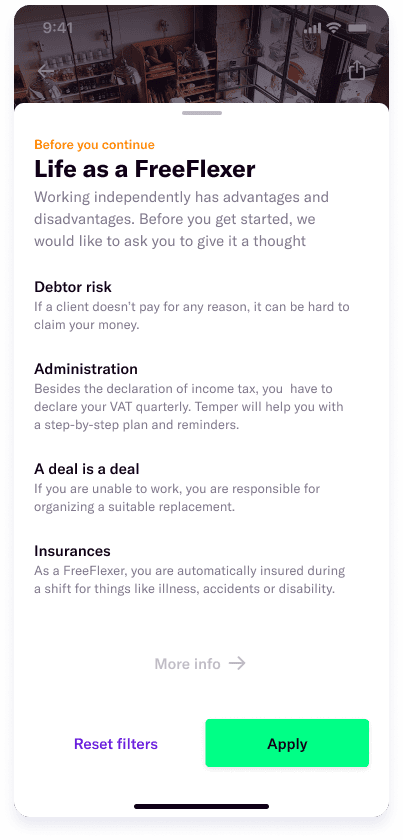
We incorporated several communication touchpoints to inform and educate users on what it takes to be a Gig worker, and what is needed to start their journey.
Impact
I handed over to the new Activation team who continued iterating and making significant growth!
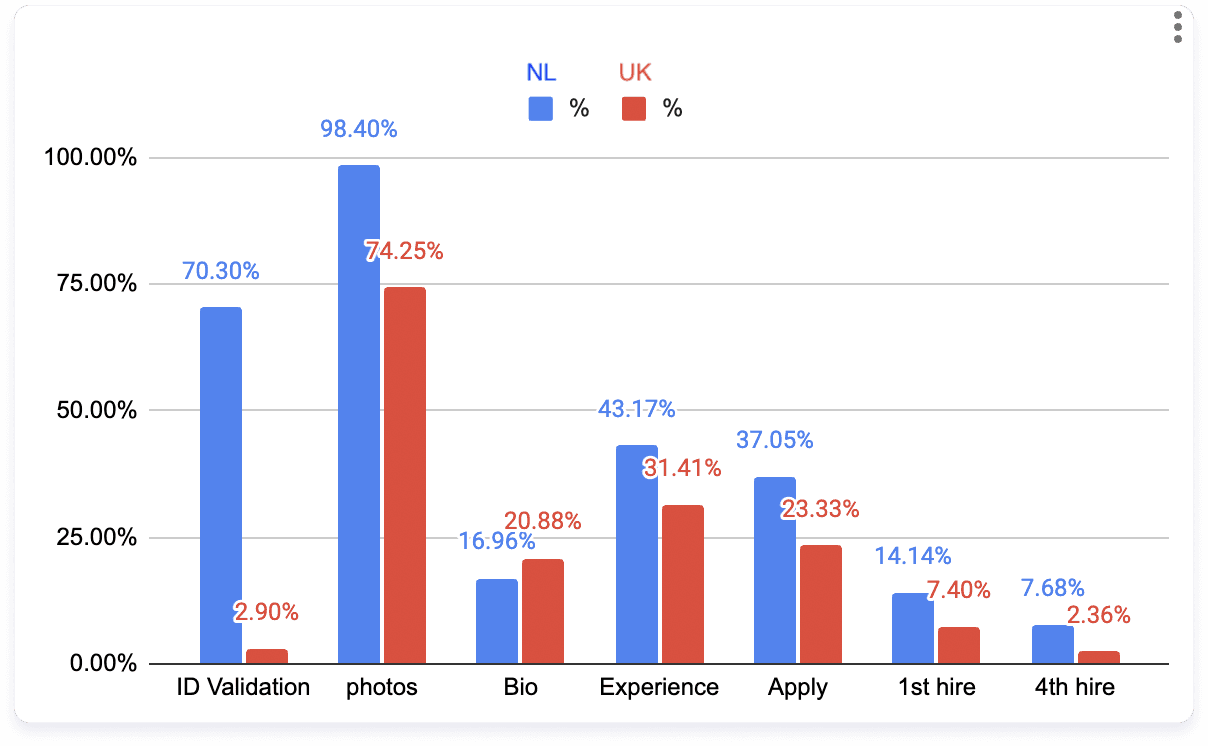
42% Increase in Completed Profiles
By mindfully reducing friction, we dramatically increased the number of users completing the registration process.
15% higher conversion
After the release of Maybe later and Complete your profile
Enhanced User Understanding
We ensured that users are better prepared for the responsibilities of being a freelancer.
Next steps
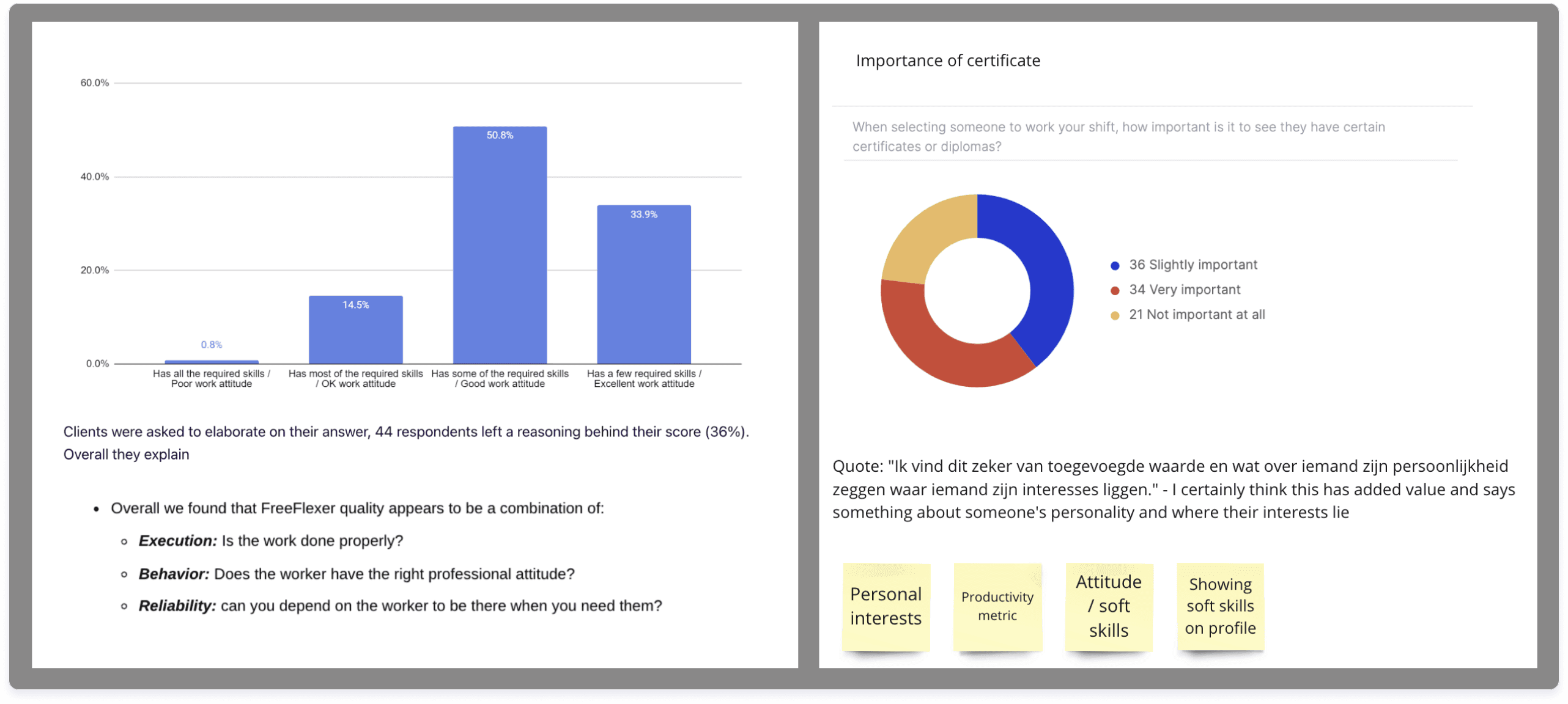
Action team is now pursuing capturing Flex workers’ skills and achievements to raise credibility
Skills & Certificates are being added. Temper partnered with hospitality training platforms, and doubled down on community