Clinical Collaboration
Role
Description
Industry
Healthcare
Duration
6 months
Responsibility
Prototyping & testing
User Research
Research & analysis
Workshop Facilitation
Doctolib acquired Siilo (now Doctolib Connect) to extend clinical collaboration across its ecosystem. 2 years later, integration was limited and adoption was alarmingly low. The problem was structural. I initiated and led a Information Architecture program to could scale across products, teams, and markets without fragmenting.
+15%
Care Team Messaging activation
+20%
Contact sync adoption
70%
WAU conversion for new organizations (5–35 members)
Shared
collaboration architecture adopted across the company
Disclaimer: Confidential information has been omitted or obfuscated. This case reflects my own perspective and not necessarily the views of Doctolib.
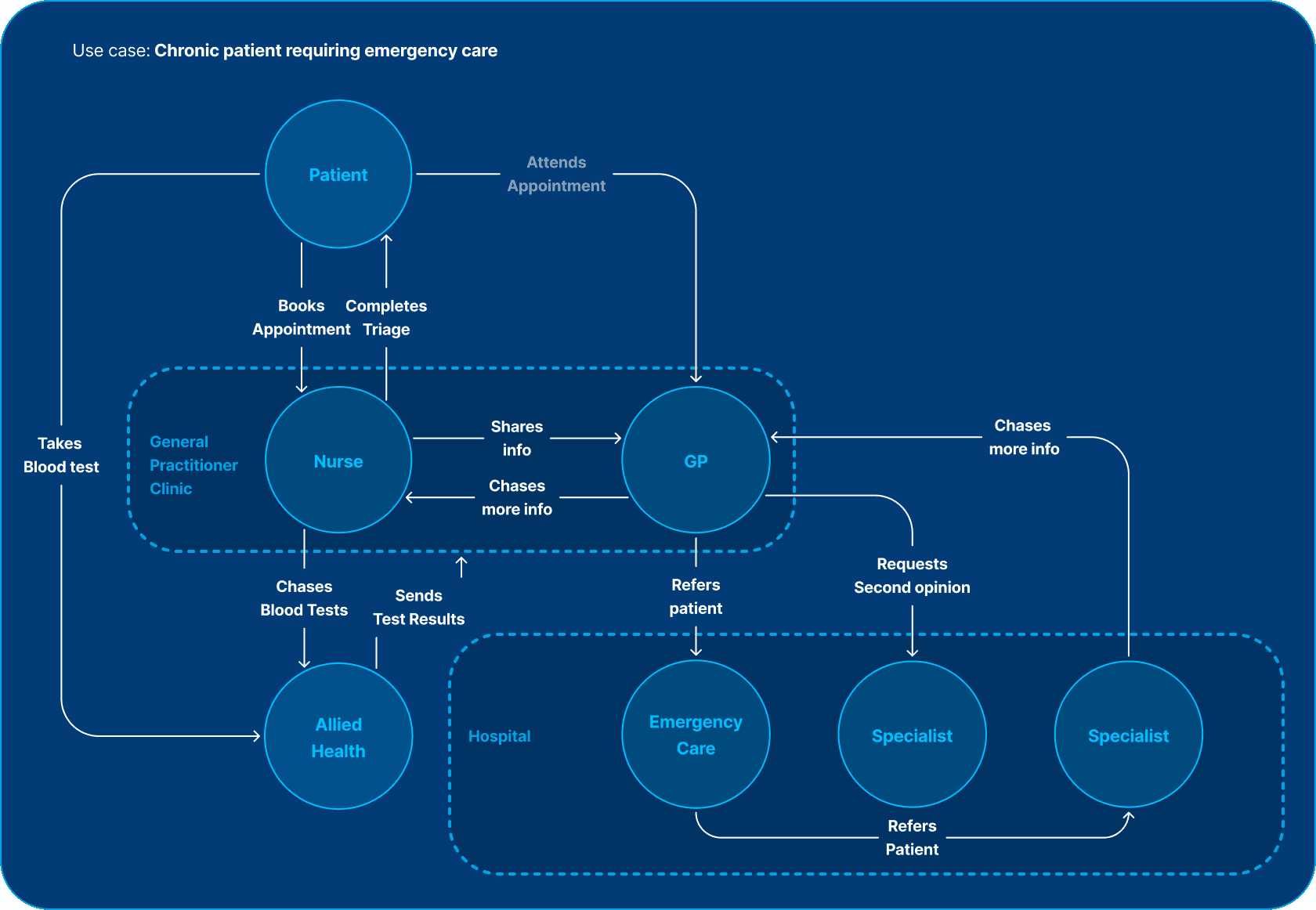
CONTEXT
Integration stalled after acquisition
Doctolib acquired Siilo to integrate a proven clinical messaging product into DoctolibOS and unlock collaboration at scale.
However, both products were mature, with distinct users, workflows, and internal logic. After two years, Connect existed only marginally inside the OS. Most Doctolib users never used it, and most Connect users never meaningfully entered the Doctolib ecosystem.
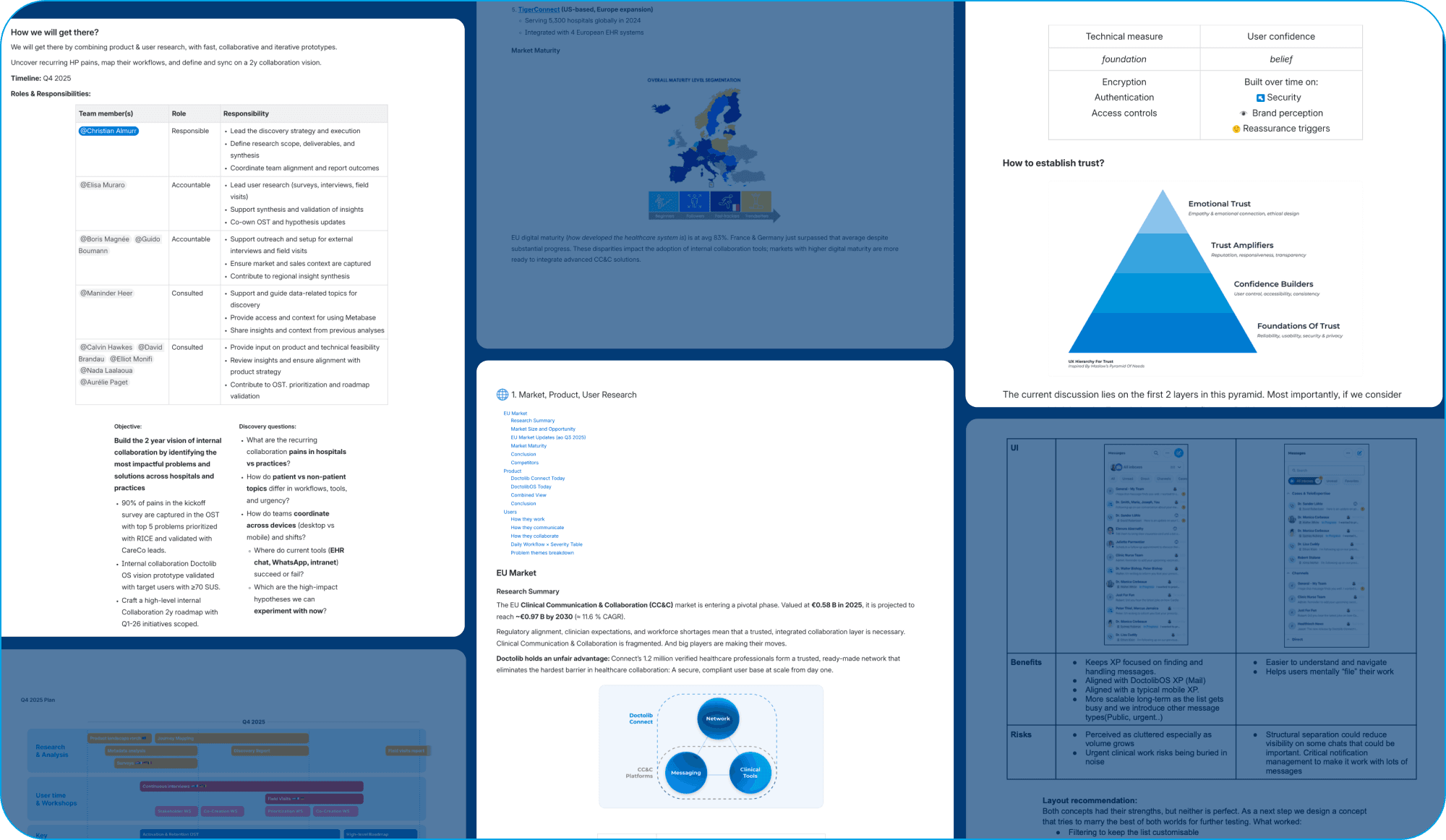
Program kickoff, research, and strategy reports
GAP
Fragmentation accumulated across collaboration surfaces
Overlapping concepts across messaging, cases, groups, and workflows
Inconsistent mental models between teams
Increasing cognitive load for healthcare professionals operating under pressure
The experience was missing, even though features worked. What was missing was a shared information architecture capable of holding integration and growth together.
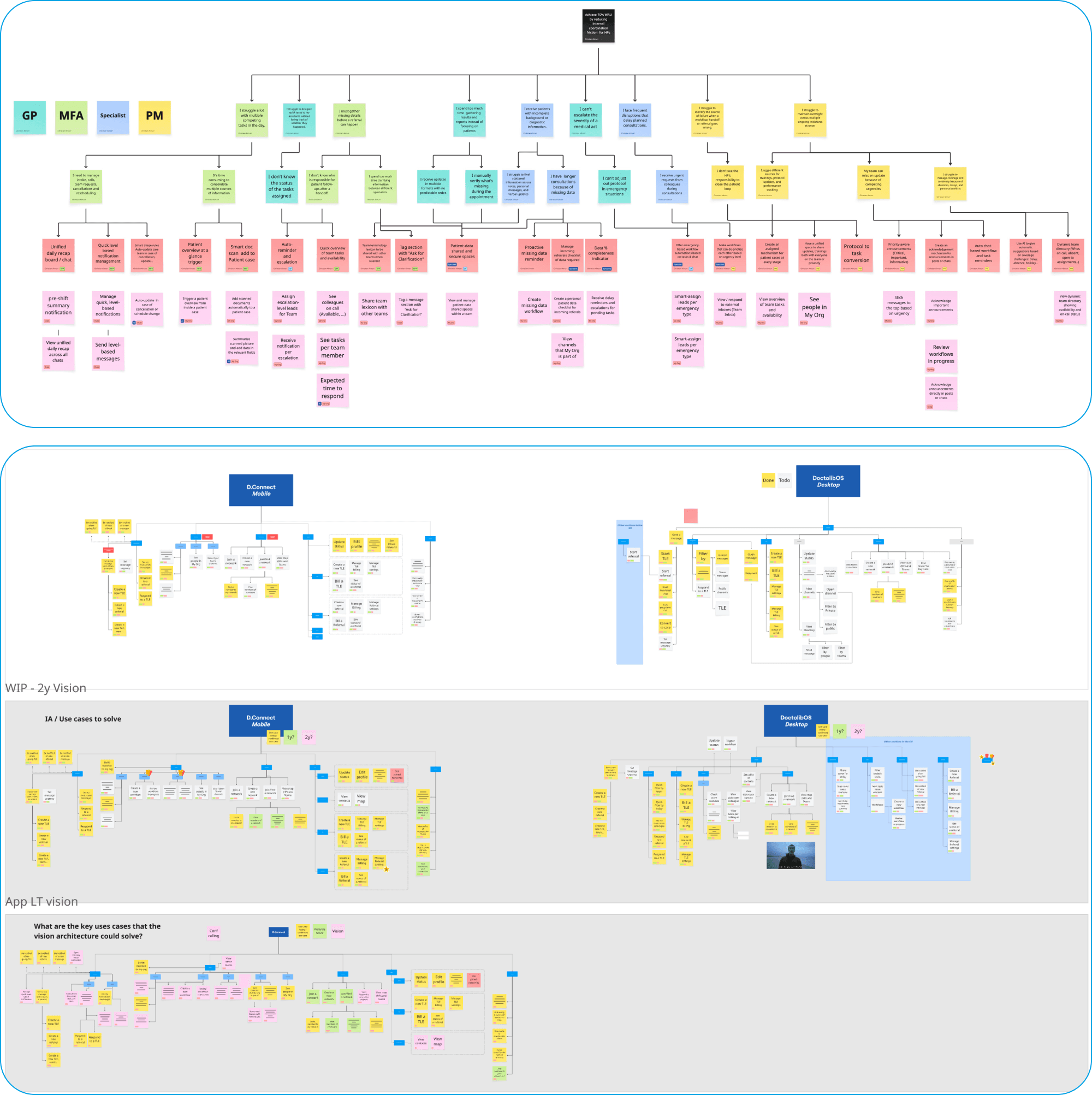
OST & IA
OBJECTIVE
Shift from feature delivery to structural alignment
With a team of 4 from user research, product design, and account management, I initiated and led an Information Architecture program to:
• Clarify the underlying structure of clinical collaboration through research
• Align teams around shared principles and beliefs
• Create a system that could absorb future growth without breaking coherence
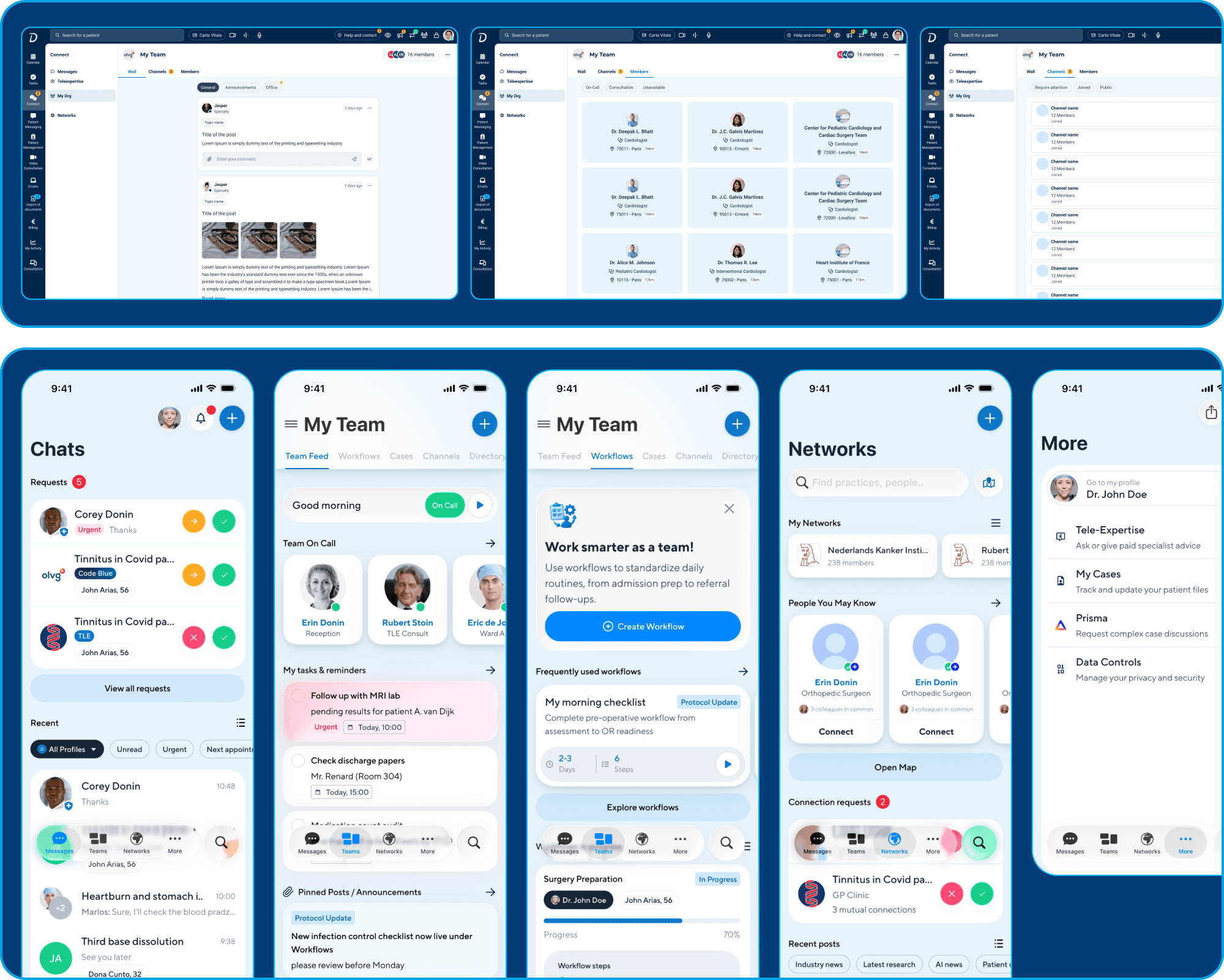
Initial UI explorations
SYSTEM
Validated structure as a roadmap anchor
We started with market research and a platform audit instead of UI design. Next to a continuous discovery cycle of user interviews and Figma protoypes testings.
The IA program defined:
• What belongs where and why
• Shared language across product, design, and engineering
• Reusable patterns adaptable across use cases and markets
I built a Doctolib Connect information architecture, that unifies messaging, clinical tools, and the medical network.
The system enabled its scale across a long term vision, 2 year target, while aligned with next year's roadmap.
For the Designers, we formalized this into 3 core principles and 7 beliefs that now support all ongoing decisions.
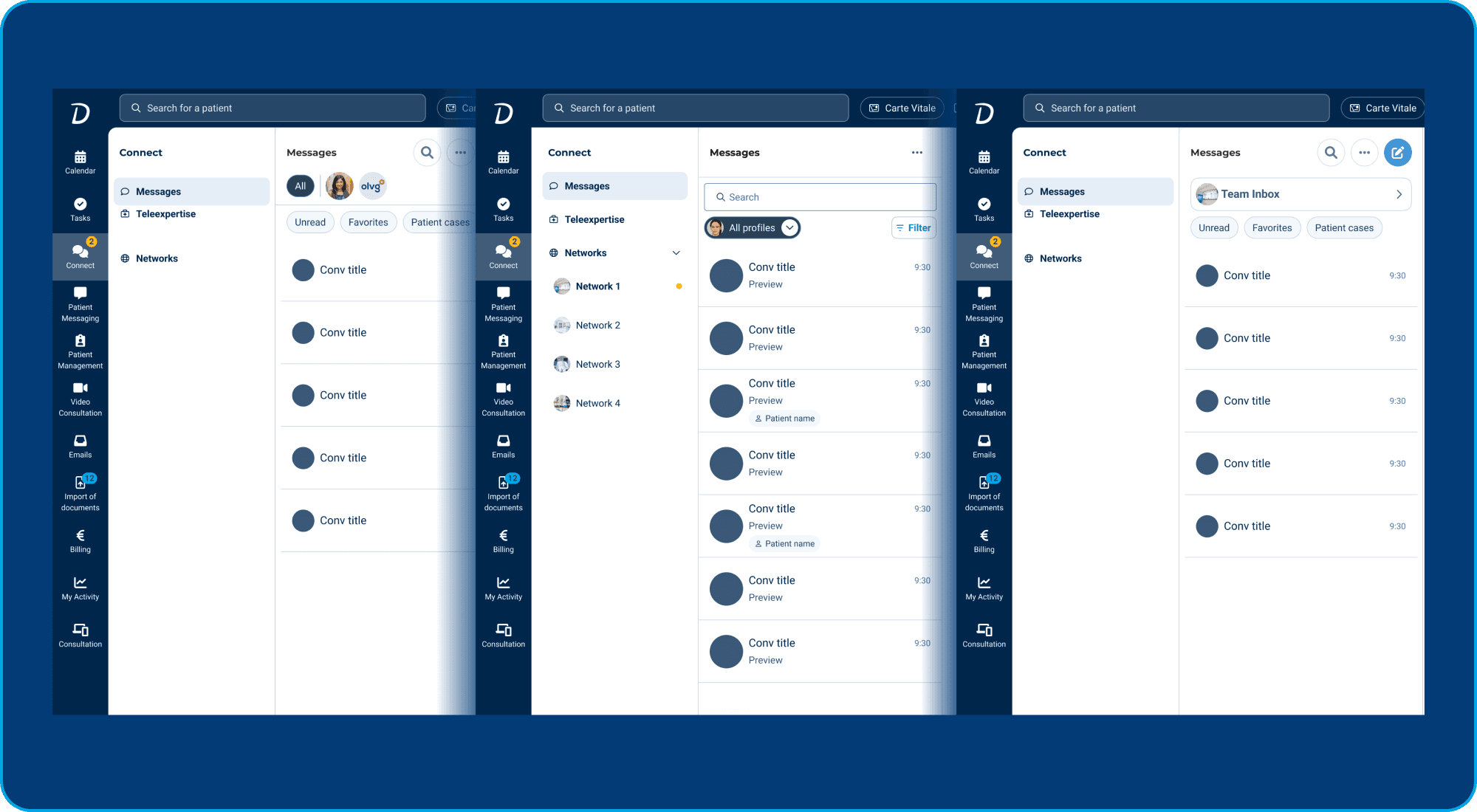
Tested navigation models with Felix T, Elisa M, and David B
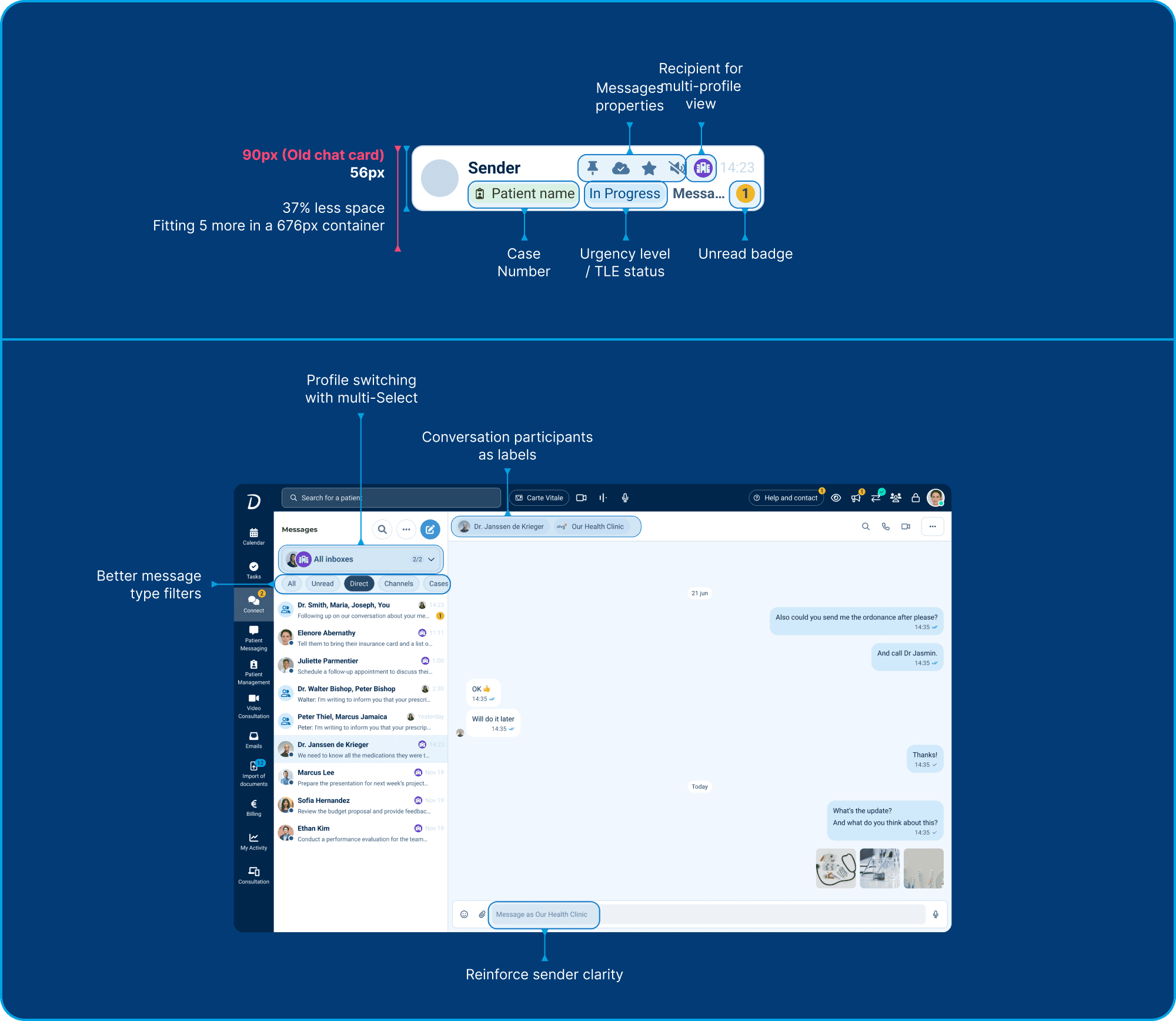
Validated UI iteration
IMPACT
Behavior changed before metrics did
Ongoing experiments to mobilize the system validated the direction:
• +15% Care Team Messaging activation
• +20% contact sync adoption
• 70% WAU conversion for newly registered organizations (5–35 users)
More importantly, operational impact was clear:
• A shared mental model for collaboration
• Faster, clearer scoping and prioritization
• Eliminated overlap and rework
• A stronger foundation for future CareCo expansion and integration
Design became a reference point for structure and clarity, acting as strategic partners across product, tech, and GTM.
—
I learned that in complex organizations, the highest design leverage often sits before features exist.
Now I approach scale by checking ambiguity and team alignment to progress without constant redesign.