HR Invoicing
Role
Design Lead @ Temper EU
Industry
Human Resources
Duration
6 months
Responsibility
Product Design
User Research
UX Engineering
Workshop Facilitation
Temper’s invoicing system became a growth blocker. It was neither reliable, nor compliant, and unable to support enterprise needs. I co-led a migration to revamp invoicing as a flexible micro-service for retention and new business verticals.
99.99%
Invoice success rate improved from 71%
100%
compliance across invoicing flows
+27%
conversion among finance users
+€12,1m
projected ARR from new businesses unlocked
Disclaimer: Confidential information has been omitted or obfuscated. This case reflects my own perspective and does not necessarily represent the views of Temper.
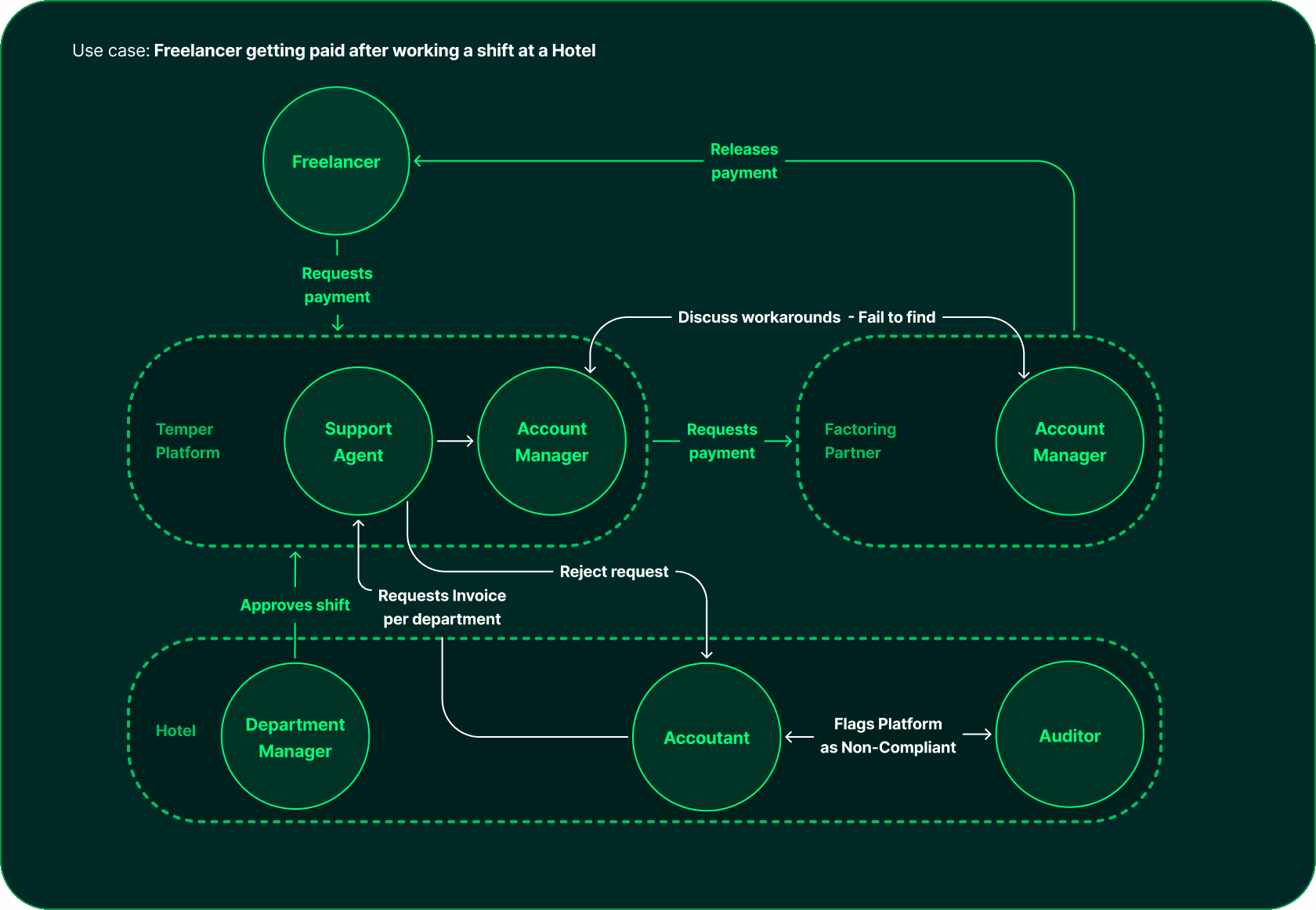
CONTEXT
Temper’s invoicing system is an outdated monolith. It’s messy, not compliant, and can’t handle upgrades.
Enterprise clients are complaining and many have churned. Invoicing was a system that everyone understood, and used differently.
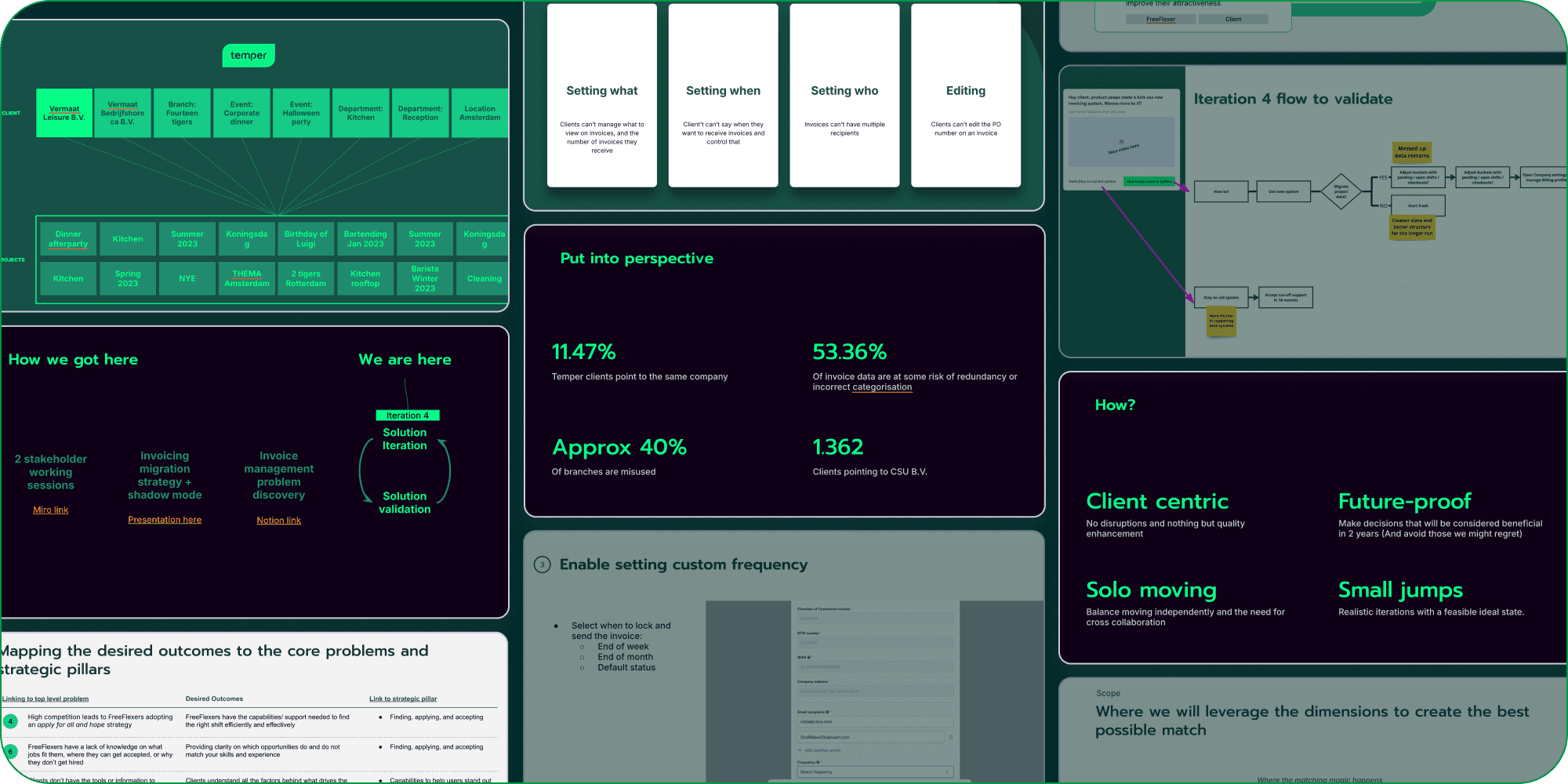
Project kickoff and initial analysis
CHALLENGE
As Temper scaled, the system started blocking growth rather than supporting it
Millions in ARR decrease 2% Y+1 reinforced decrease
71% error rate 90% for Enterprise
Increased Enterprise Churn, many only for Invoicing
Limited access to Business verticals for Invoicing
Outcome:
Rebuild the invoicing system through small, lean releases to create a customisable payment experience that boosts retention and supports growth, at 0 friction.
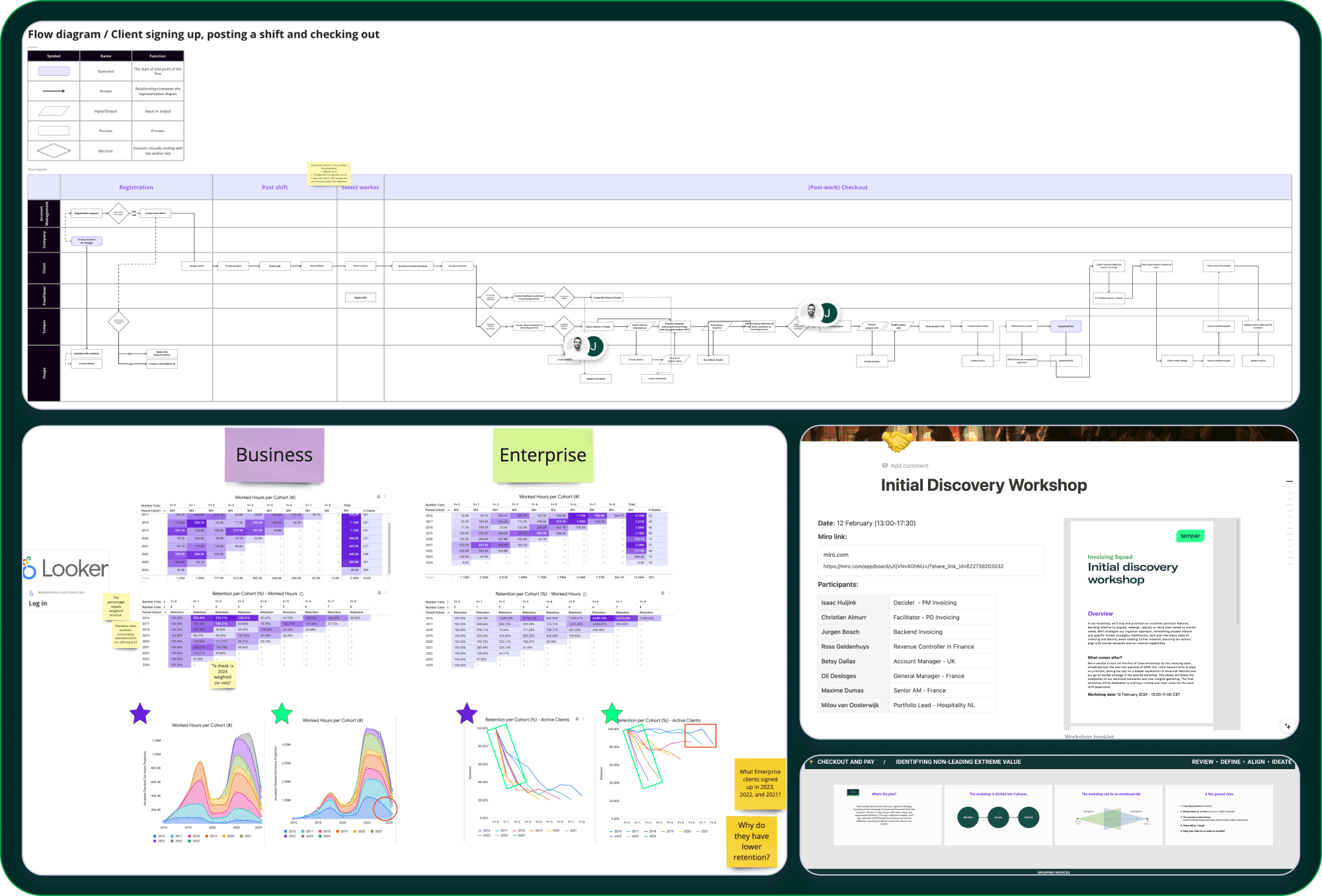
Mapping, Data deep-diver, and Workshop
MOVE
We planned a migration strategy to move clients at minimal friction, while experimenting solutions and minimising risk.
Everyone had to know what is happening. We trained the teams, iterated frequently, and migrated gradually.
Invoicing no longer a growth blocker
Frontline work clients come from various verticals, each with a unique invoice profile. Flexibility is the only way.
Understand invoices your way, but use it like everyone does
Bringing all stakeholders into a unified vision was hard and critical. There’s work for everyone.
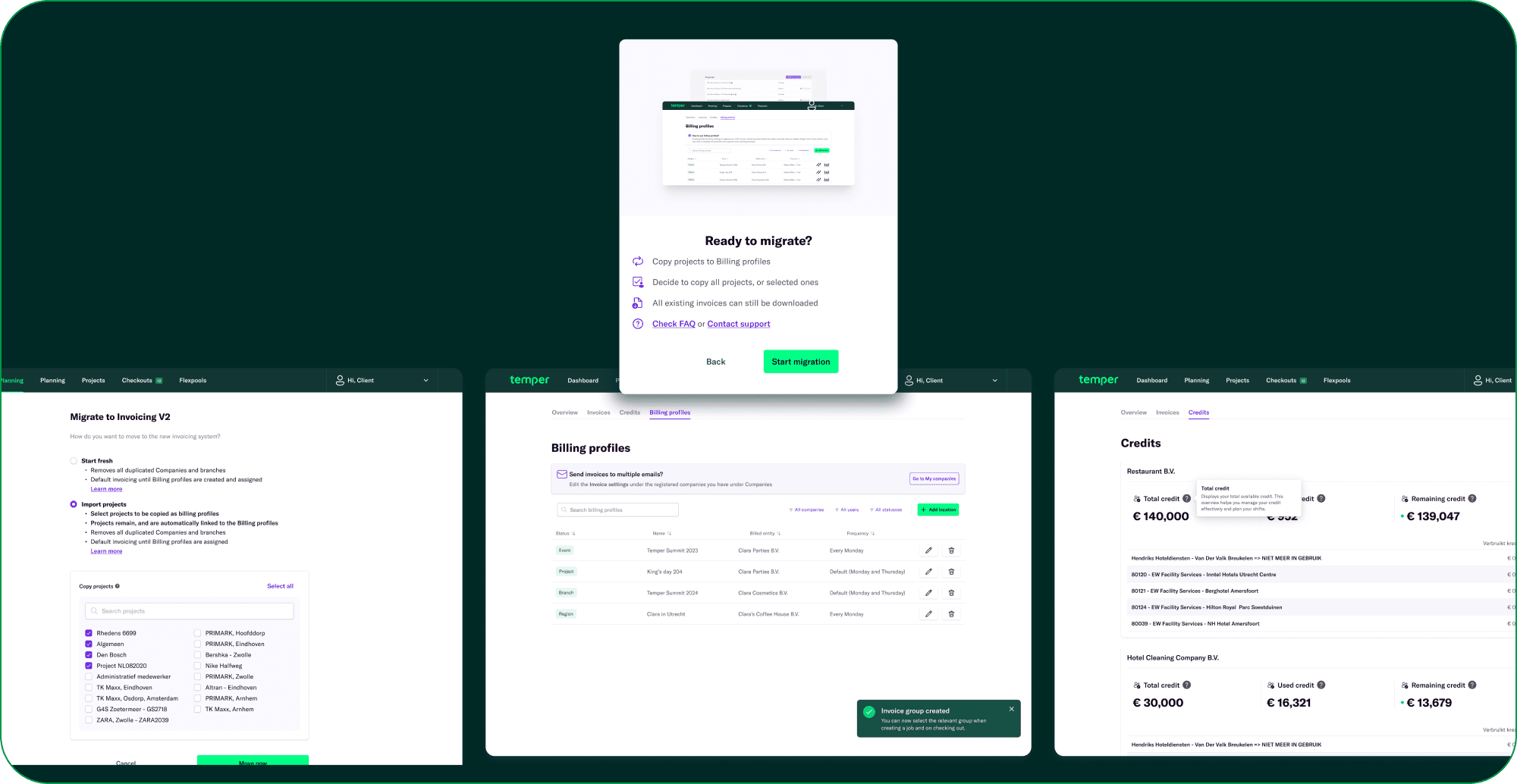
Initial UI explorations
SYSTEM
The Finance section was redesigned with efficiency, flexibility and education in mind.
We rebuilt invoicing to support multiple business models within a single, coherent structure. The system was organized around four pillars:
Billing Profiles
An opt-in model defining when invoices are generated, who receives them, and what they contain.Financial Overview
A redesigned overview focused on clarity and education, giving clients visibility into spend and behavior.Invoice Management
Scalable tools for finance users to manage references, notes, and compliance needs.Credit Management
Centralized handling of credits across enterprise companies and branches.
This structure supported diverse verticals, from events to construction and frontline work, without branching into custom logic per client.
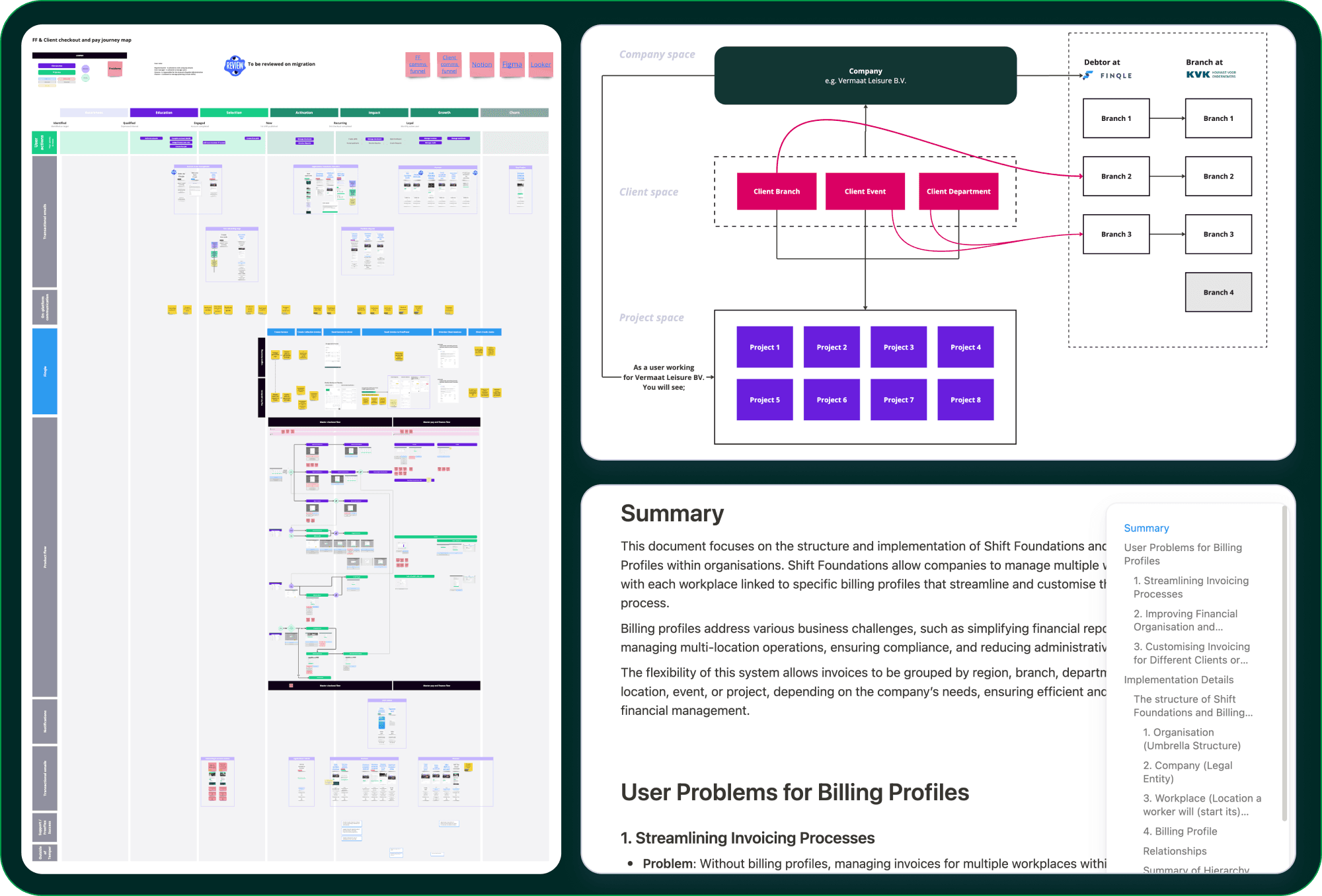
Validated migration strategy
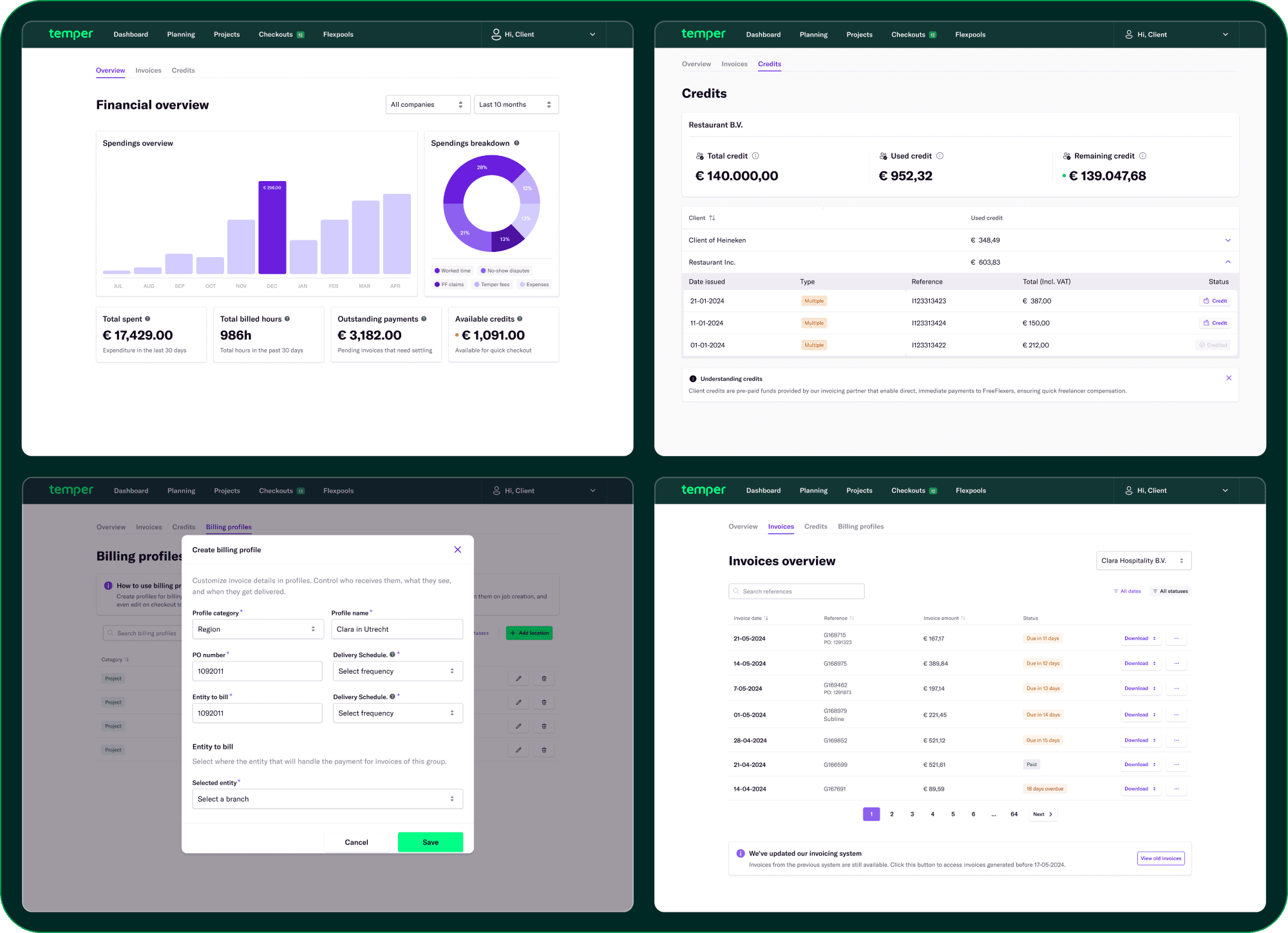
Validated Financial Overview Screens
IMPACT
Growth returned once trust was established
The results validated the approach:
Invoice success rate improved from 71% to 99.90%
100% compliance achieved across invoicing flows
27% increase in conversion among finance users
+€12.1M projected MRR, driven by retention and access to new enterprise verticals
Invoicing stopped being a blocker for growth and opened Temper to new business verticals, with Events presenting the largest opportunity.
—
In revenue-critical systems, design impact is measured as much by risk reduced as by features shipped. Designing for trust, flexibility, and scale often means resisting short-term fixes in favor of structures that hold under pressure.
This mindset continues to guide how I approach complex systems where failure has real business consequences.