Launching & Closing Jedo
Role
Founder & CEO
Industry
Travel & Tourism
Duration
6 months
Responsibility
Fundraising & Negotiation
Hiring & Management
Business growth
Board reporting
Jedo was a founder-led attempt to unlock local tourism through AI-assisted trip planning and booking. The market showed strong demand. Despite early traction and strong unit economics, market shifts limited growth. We chose to stop.
53,000
registered users
$100,000
profit at $0.73 CAC
+74%
Increase in monthly bookings
+43%
average spend per booking
CONTEXT
Local travel demand was high, but impossible to navigate
Planning short trips in one’s own region should have been easy. Instead, it was surprisingly hard. The market was fragmented in all the wrong ways:
Discovery of local excursions was inefficient
Supply was informal and manually operated
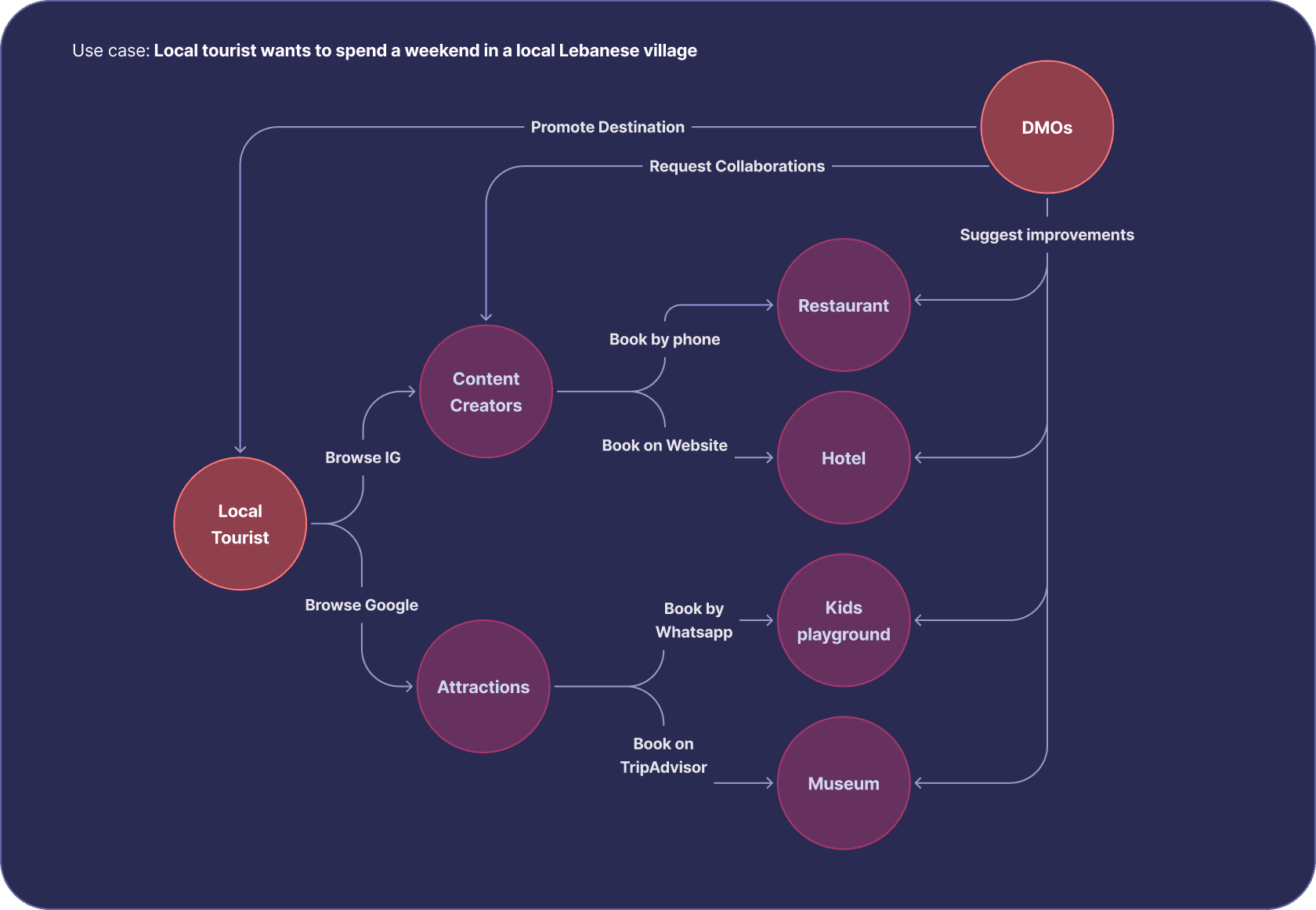
Regional institutions struggled to connect locals with local businesses
This created high interest without an anchor:
~400,000
Weekly active local tourists market
80%
can't find excursions
that suit their tastes.
60%
see access to local attractions as main blocker
The scope was clear from day one:
A founder-led, zero-to-one product with no guaranteed distribution, moat, or institutional backing.
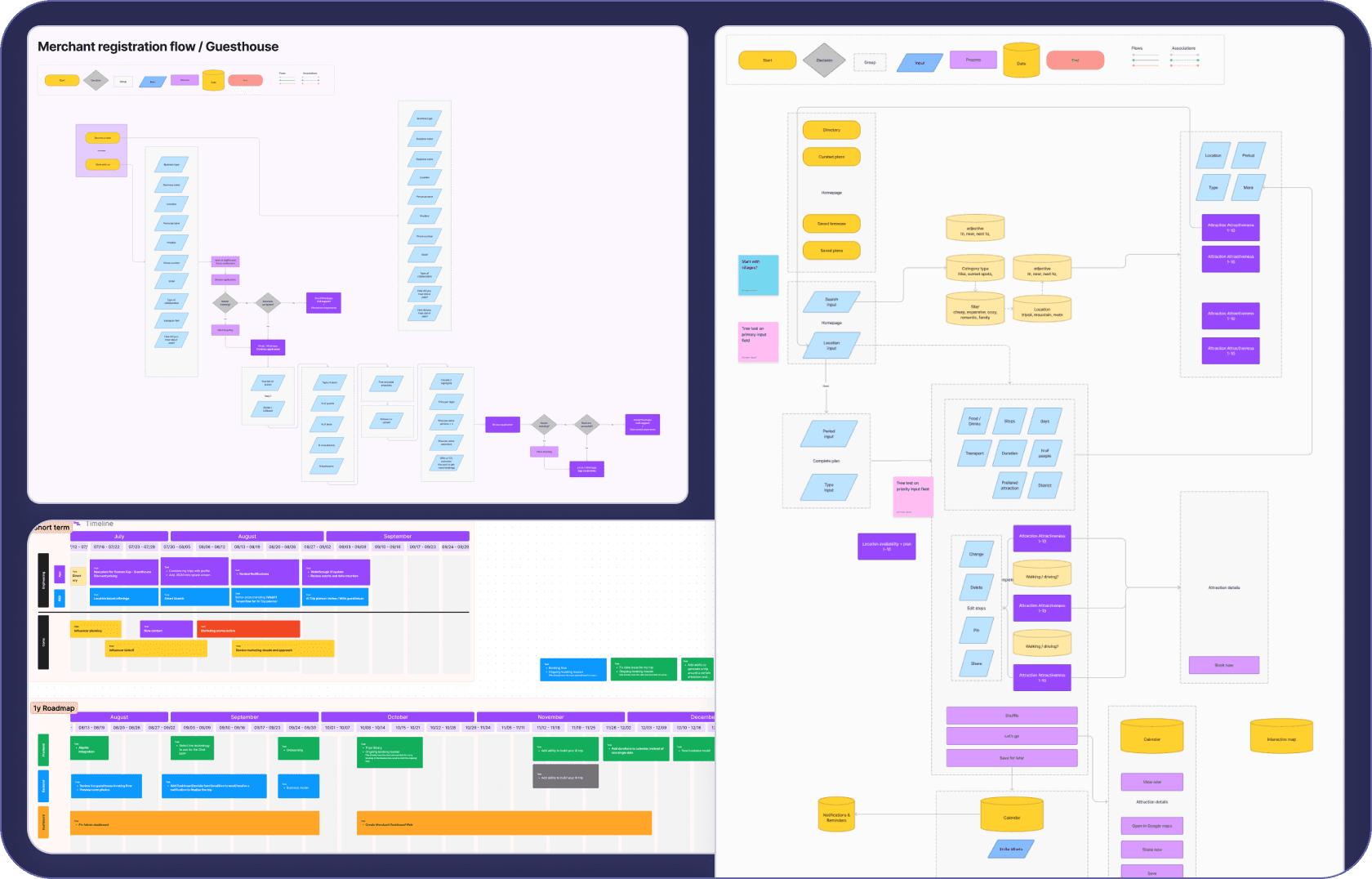
Registration flow, AI-Engine mapping, Roadmap planning
GAP
Interest existed, but decisions didn’t happen
People wanted spontaneity, but the system made decision-making heavy. Early exploration surfaced consistent signals:
Locals valued flexibility, yet spent disproportionate time deciding where to go
Most local businesses managed bookings manually, with no digital infrastructure
Destination Management Organizations acted as regulators, not connectors
The problem wasn’t lack of demand. It was lack of decision support in a fragmented ecosystem.
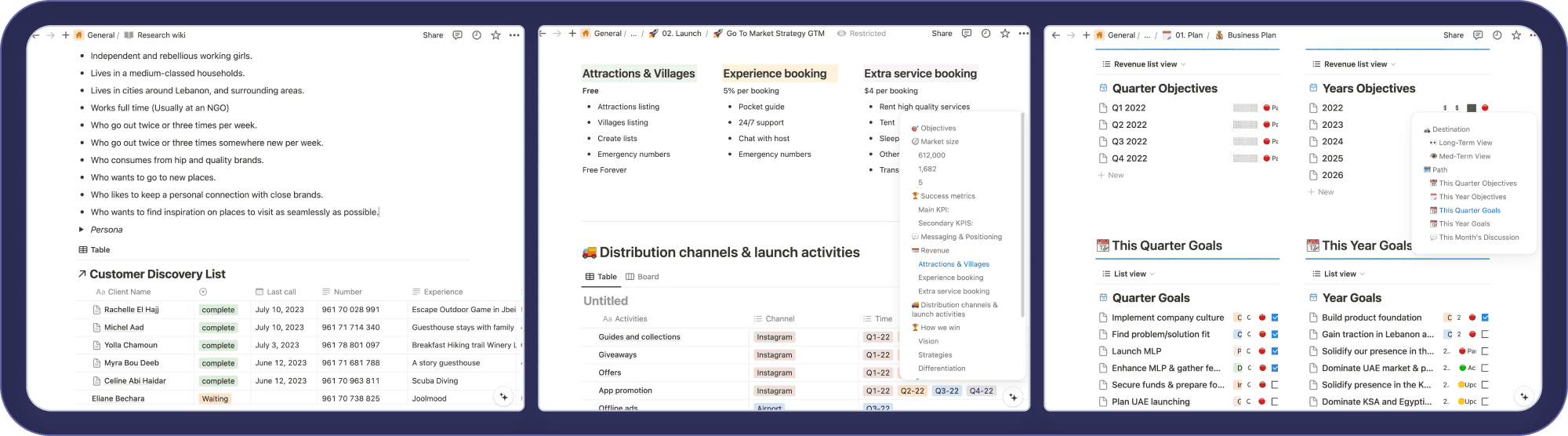
Research & Board reporting documents
MOVE
Optimize for learning speed, not feature depth
Instead of over-investing in features, I focused on designing a lightweight MVP to surface real market signals as fast as possible.
We used AI deliberately as a way to:
Reduce decision friction during discovery
Adapt recommendations based on observed behavior, not declared intent
Help users move from browsing to booking faster
After securing $70,000 in friends-and-family funding, we optimized for connectivity and speed, not polish. This led to:
+74% increase in monthly bookings
+43% increase in average spend per booking
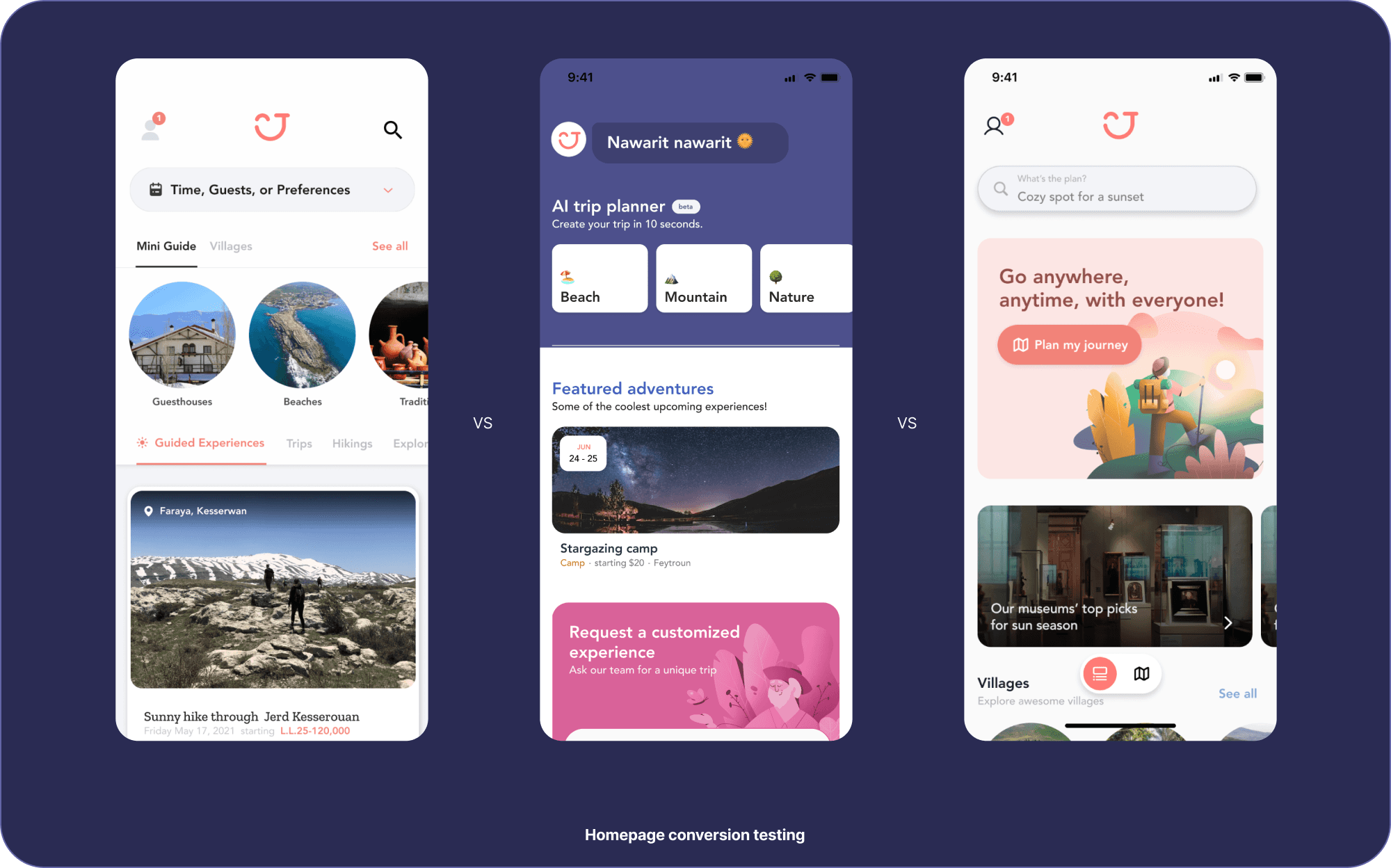
Homepage conversion testing
SYSTEM
A growth loop tuned to local realities
We designed a product-led growth system shaped around three stakeholders, with AI supporting signal extraction and iteration rather than heavy infrastructure:
Tourists
Low-friction discovery to support fast, spontaneous trip decisionsMerchants
Minimal operational overhead through simple booking flowsDMOs
Real usage signals instead of theoretical demand
This system allowed rapid iteration without locking us into premature architectural or operational commitments.
AI helped us observe behavior patterns early, adapt supply visibility, and iterate without assuming long-term certainty.
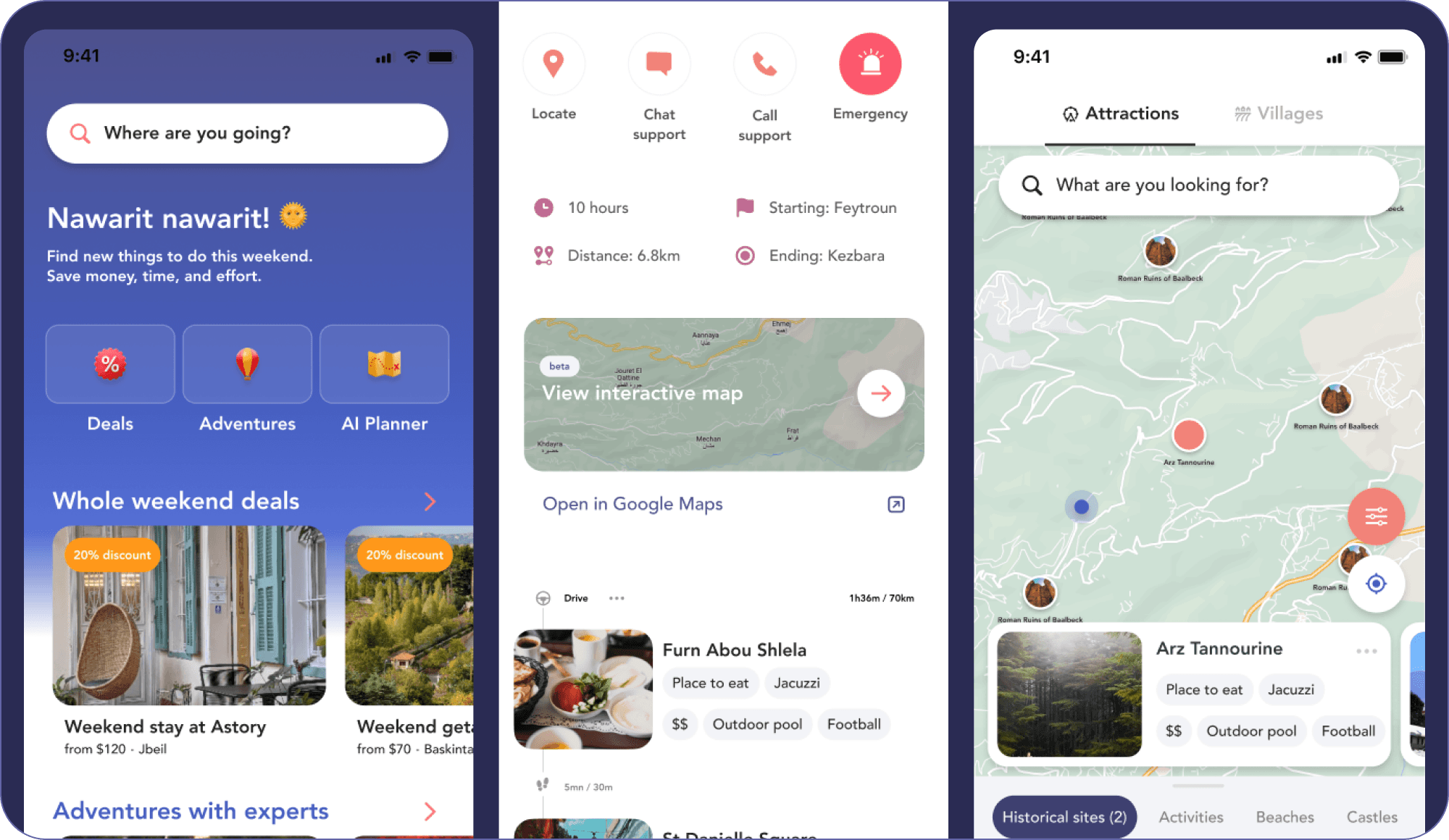
Validated UI iteration
OUTCOME
The same signals that enabled growth signaled when to stop
Early results validated the approach:
First release: $12,000 profit within two months
Second release:
53,000 registered users
$100,000 profit in six months
$0.73 CAC
Shortly after, a major competitor launched a similar solution days before our planned expansion, effectively erasing the differentiation window.
At the same time, the outbreak of war in Gaza and Southern Lebanon severely impacted the tourism industry, halting demand and scaling plans.
Based on these signals, we made the decision to stop.
—
Designing for uncertainty means knowing when to accelerate and when to stop. The same signal-driven discipline, supported by AI-assisted learning and fast iteration, enabled both rapid growth and a timely exit.
This mindset continues to shape how I evaluate product bets today: prioritizing learning velocity, structural advantage, and judgment over momentum alone.