Role
Product Design Lead
Duration
2 days
Industry
HealthTech
Team
Albert - Software Engineer
Vasili - Backend Engineer
Paul - Frontend Engineer
Harshitha - QA Lead
Jina - CC Performance
Emirhan - Backend Engineer
TL;DR
Referrals fail because clinical context doesn’t travel. Patients arrive with missing data.
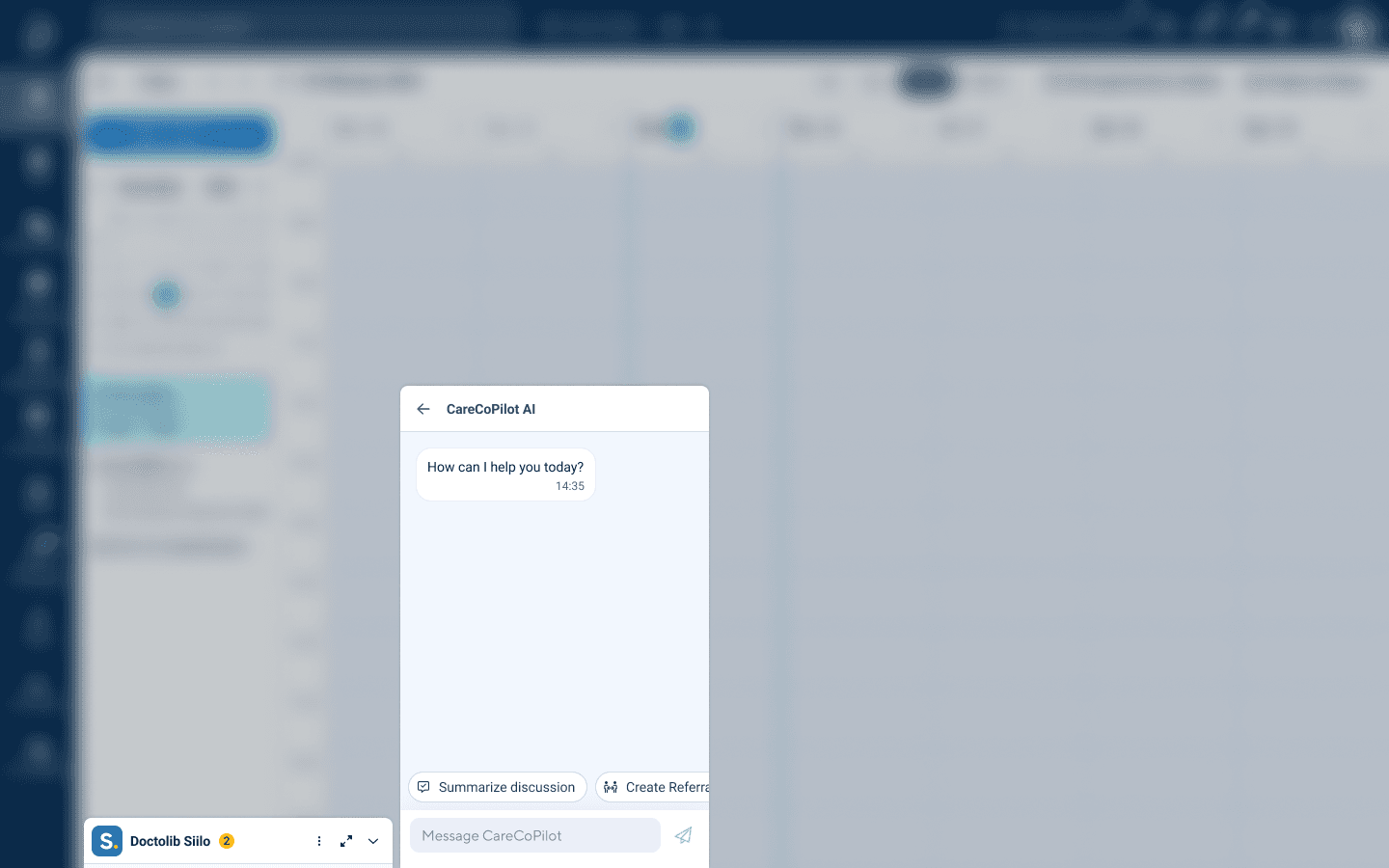
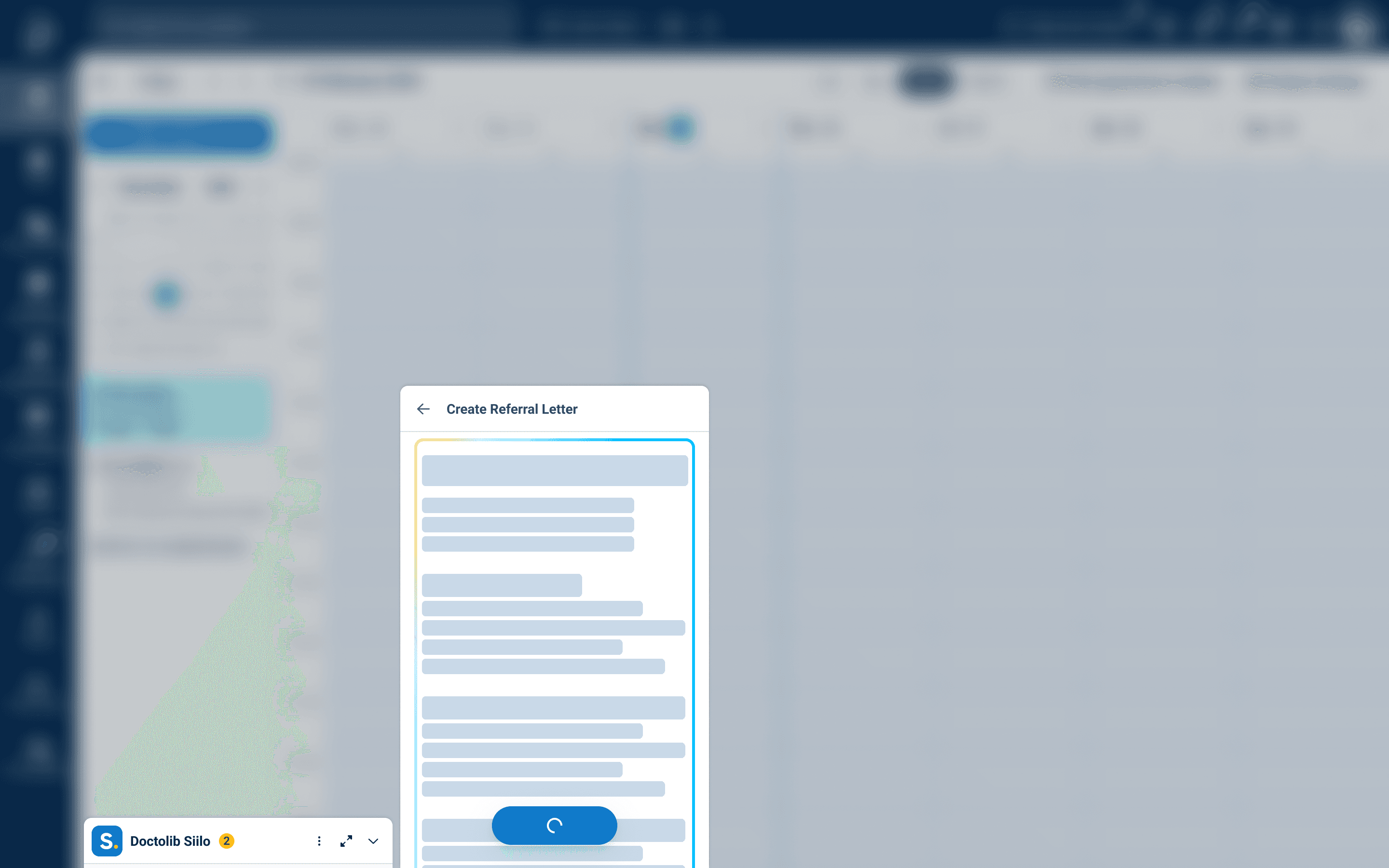
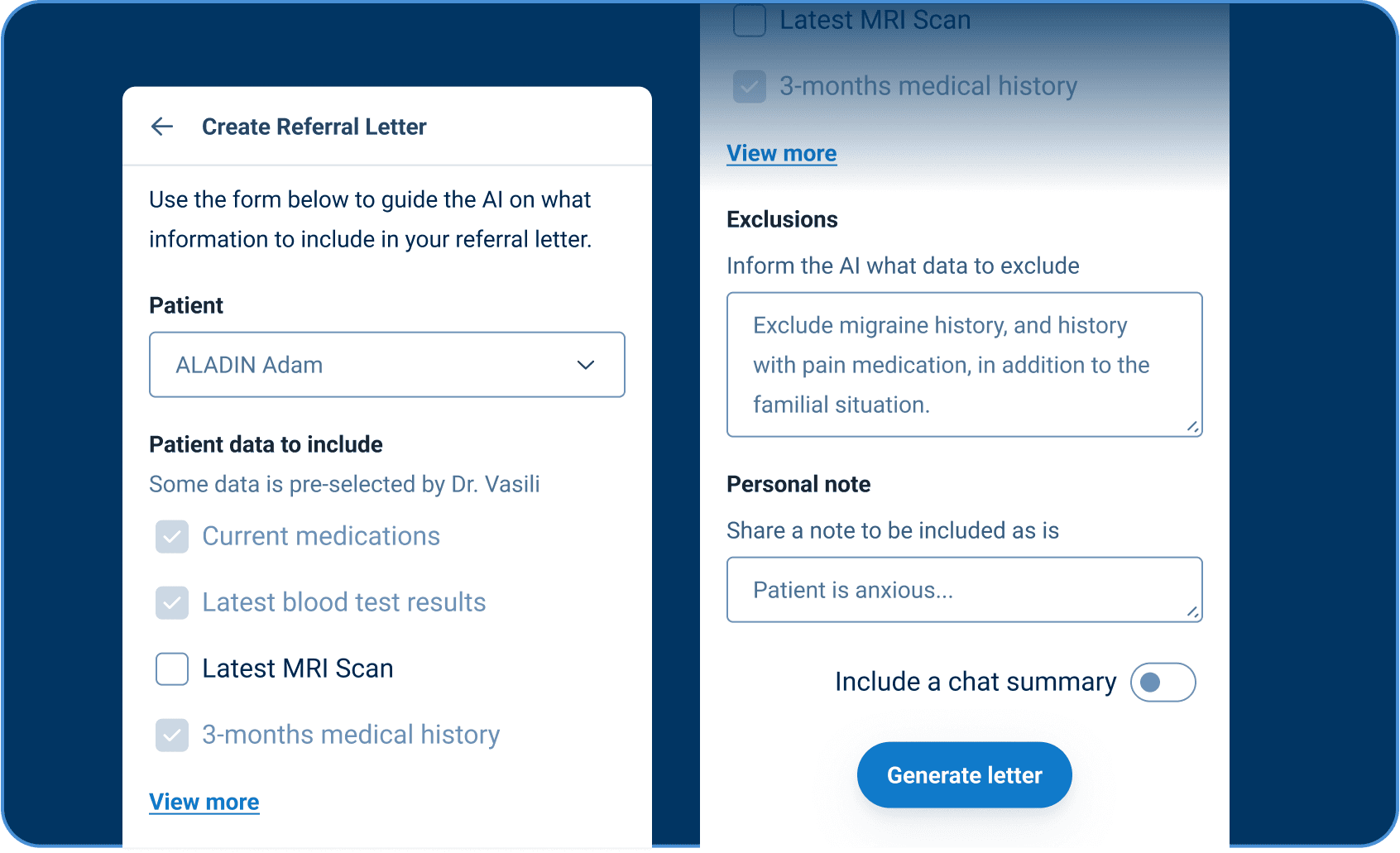
I led the research and design of an AI-assisted referral agent a that turns scattered, informal data into structured, specialty-ready context, closing the last mile between referral intent and safe care delivery.
Disclaimer: Confidential information has been omitted or obfuscated. This case reflects my own perspective and not necessarily the views of Doctolib.
Context
Referrals break at the moment context is needed most.
Care coordination relies on referrals, yet most arrive incomplete, informal, or fragmented across tools. DoctolibOS schedules the appointment, but the clinical story often follows later, if at all.
65%
of referrals lack sufficient clinical context
25%
longer wait times due to incomplete referrals
16%
duplicate tests when prior results are missing
Diagnosis
Appointments move. Information doesn’t.
Referrals today depend on free text, phone calls, PDFs, and inbox chasing across disconnected EHRs and messaging tools. The result is predictable:
Specialists
receive low quality information and have to chase it
therefore delaying and deprioritizing decisions
GPs & Assistants
spend hours reconstructing context
The System
Use AI to structure context after clinicians have already discussed the case, not before.
If we can transform unstructured clinical conversations into structured, specialty-ready summaries, we can improve referral quality without changing clinician behavior.
We beat interoperability, the biggest healthcare challenge!
The output can be shared inside or outside Doctolib, bridging interoperability gaps without forcing EHR lock-in.
Projected Impact
Broken referrals account for ~30% of direct HCP pain points, and ~52% indirectly. We are addressing Both.
Reclaim hundreds of hours per year per practice
Reduce duplicate testing
Cut patient wait times by up to 25%
Improve referral quality and triage confidence