From zero to launch: building an AI travel product
Founder & CEO
Industry
Travel & Tourism
Duration
2 years
Responsibilities
Product Design
Fundraising & Negotiation
Hiring & Management
Board reporting
Business Growth
Team
Co-Founder & CTO
Co-Founder & CFO
2x Frontend Engineers
2x Backend Engineers
1x System Architect
2x Data Analysts
2x Account Managers
Videographer
Marketing Manager
Operations Manager
TL;DR
Jedo was a founder-led attempt to unlock local tourism through AI-assisted trip planning and booking. The market showed strong demand. Despite early traction and strong unit economics, market shifts limited growth. We chose to stop.
53,000
active users
$100,000
profit at $0.73 CAC
+76%
Increase in monthly bookings
+43%
average spend per booking
Context
Working in consulting meant more travel, and less time to discover the local cultures.
Lebanon has a whole lot to offer (and no, it doesn’t have a desert). Yet so many people find it very hard to plan their trip there.
~400,000
Weekly active local tourists market
80%
can't find excursions
that suit their tastes.
60%
see access to local attractions as main blocker
The goal was to create a solution that would streamline the discovery of local experiences, making it easier and quicker for travelers to find activities that matched their preferences.
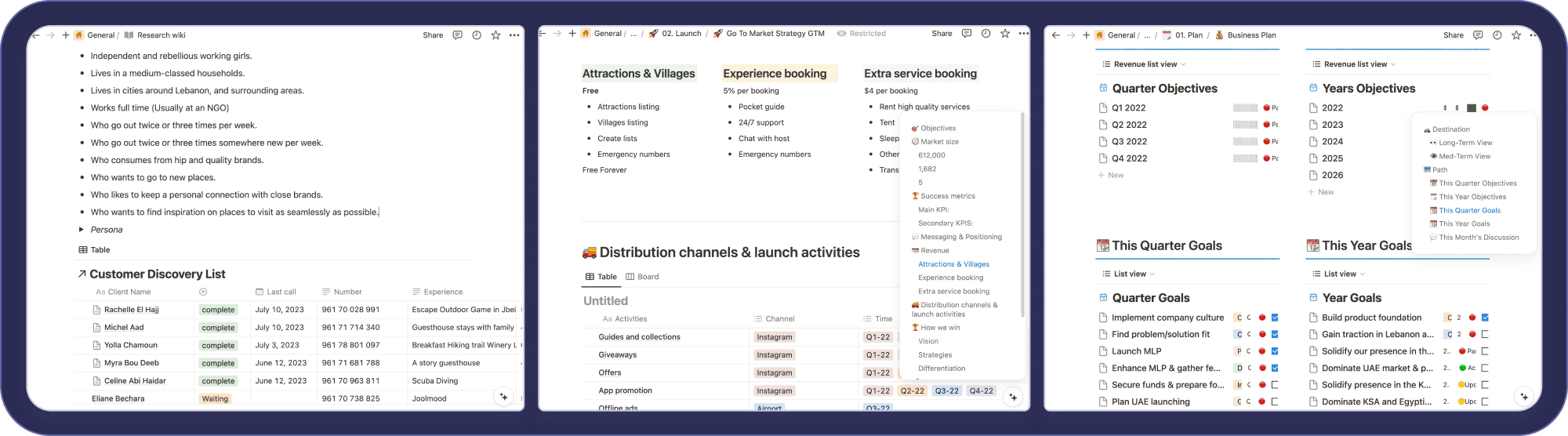
Used Notion for reporting and documenting
Direction
After an MVP with little traction, we realised Local AI Travel is a tough, and exciting nut to crack.
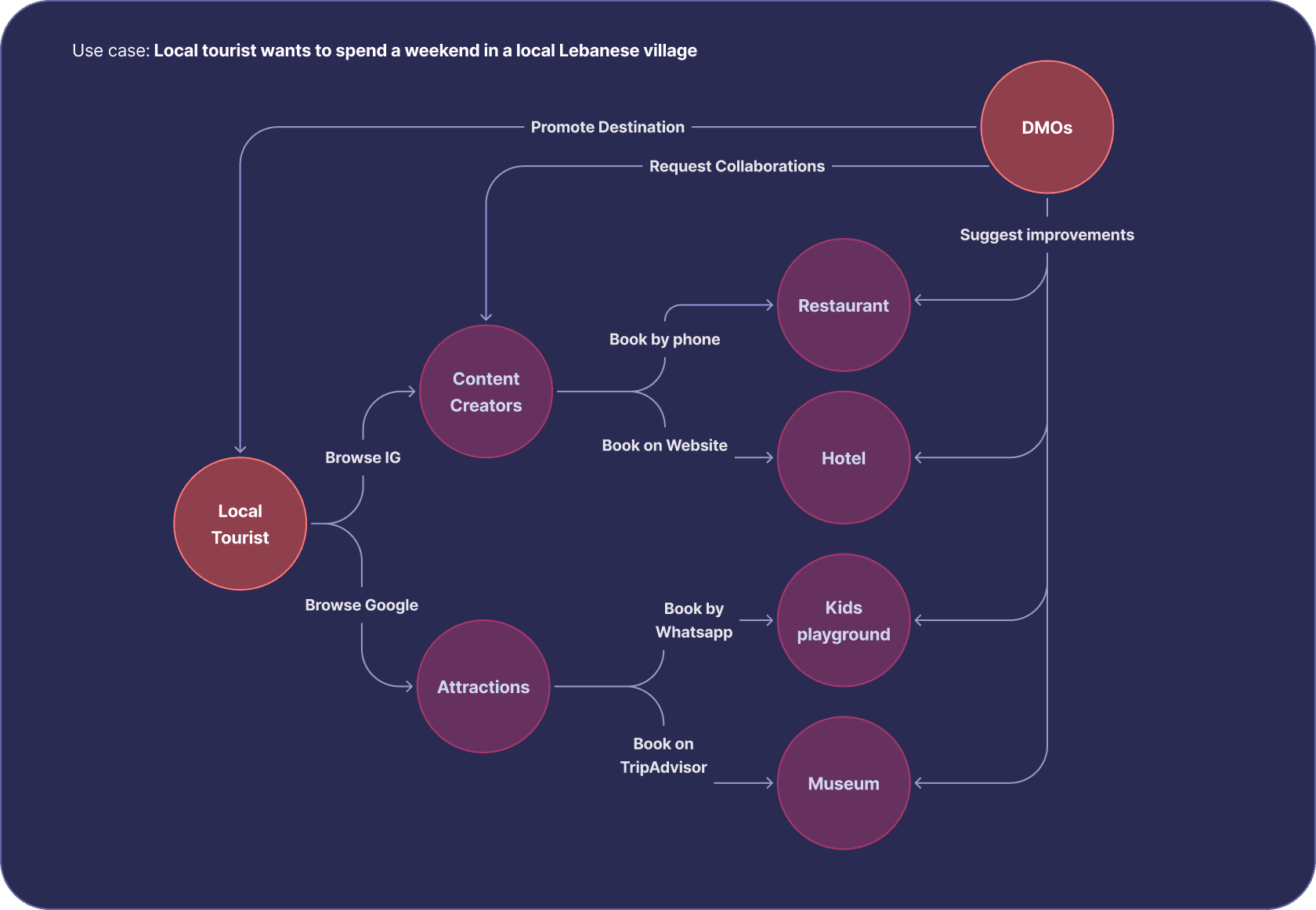
I coached the team on continuous discovery, and lean execution. By that, we learned that the problem wasn’t lack of demand. It was lack of facilitation and reach in a fragmented ecosystem:
Locals
valued spontaneity, yet spent a long time deciding where to go
Merchants
aka Local Businesses, managed bookings on pen & paper
DMOs
aka Destination Management Organizations, acted as regulators, not connectors
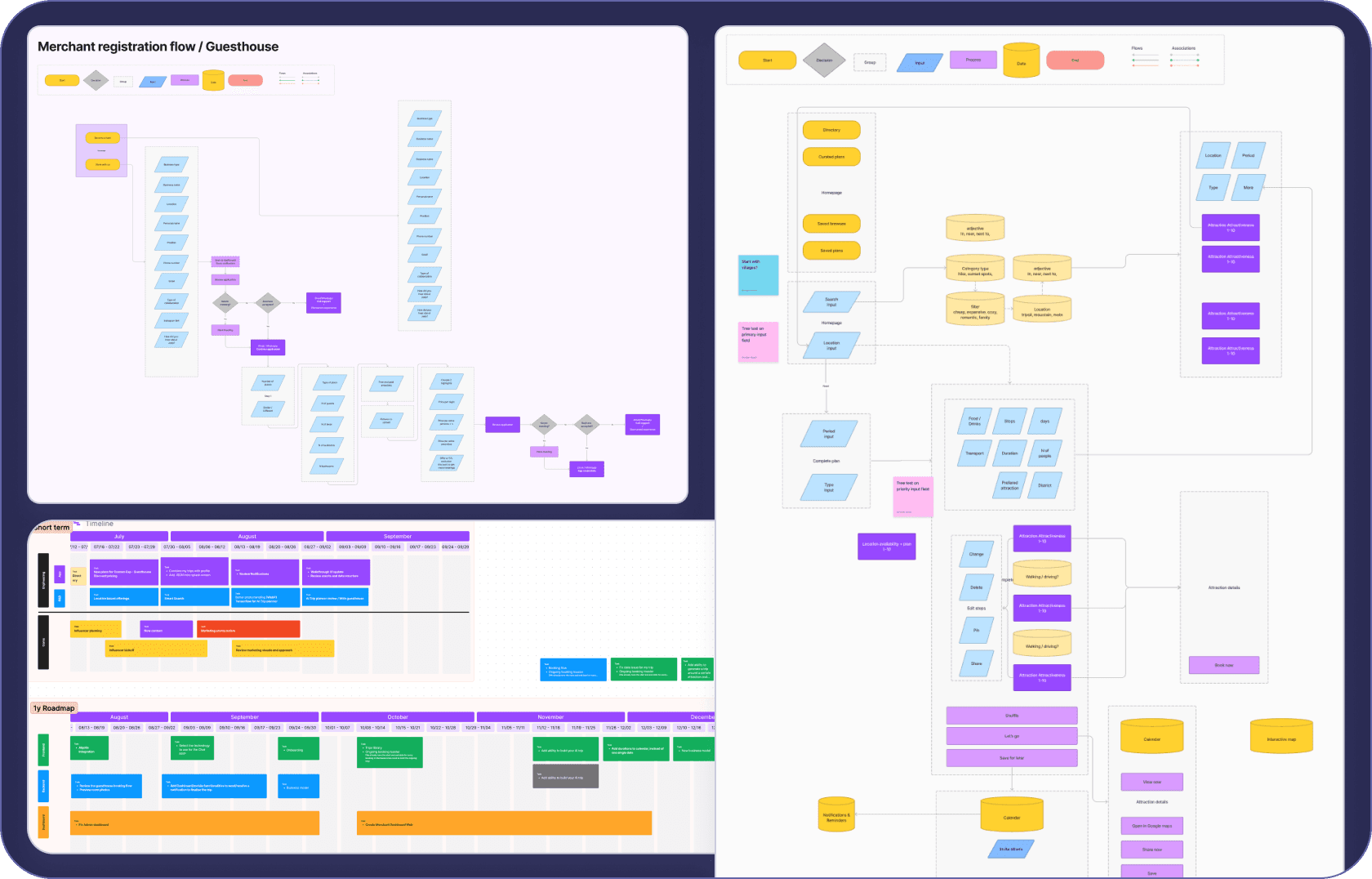
Mapping of flows and architecture
Our Offer
For Tourists
Low-friction discovery to support fast, spontaneous trip decisions
For Merchants
Minimal operational overhead through simple booking flows
For DMOs
Real usage signals and analysis on behavioral data, tourist and destination research
For Authorities
Reports that enabled behavior and data-based strategies
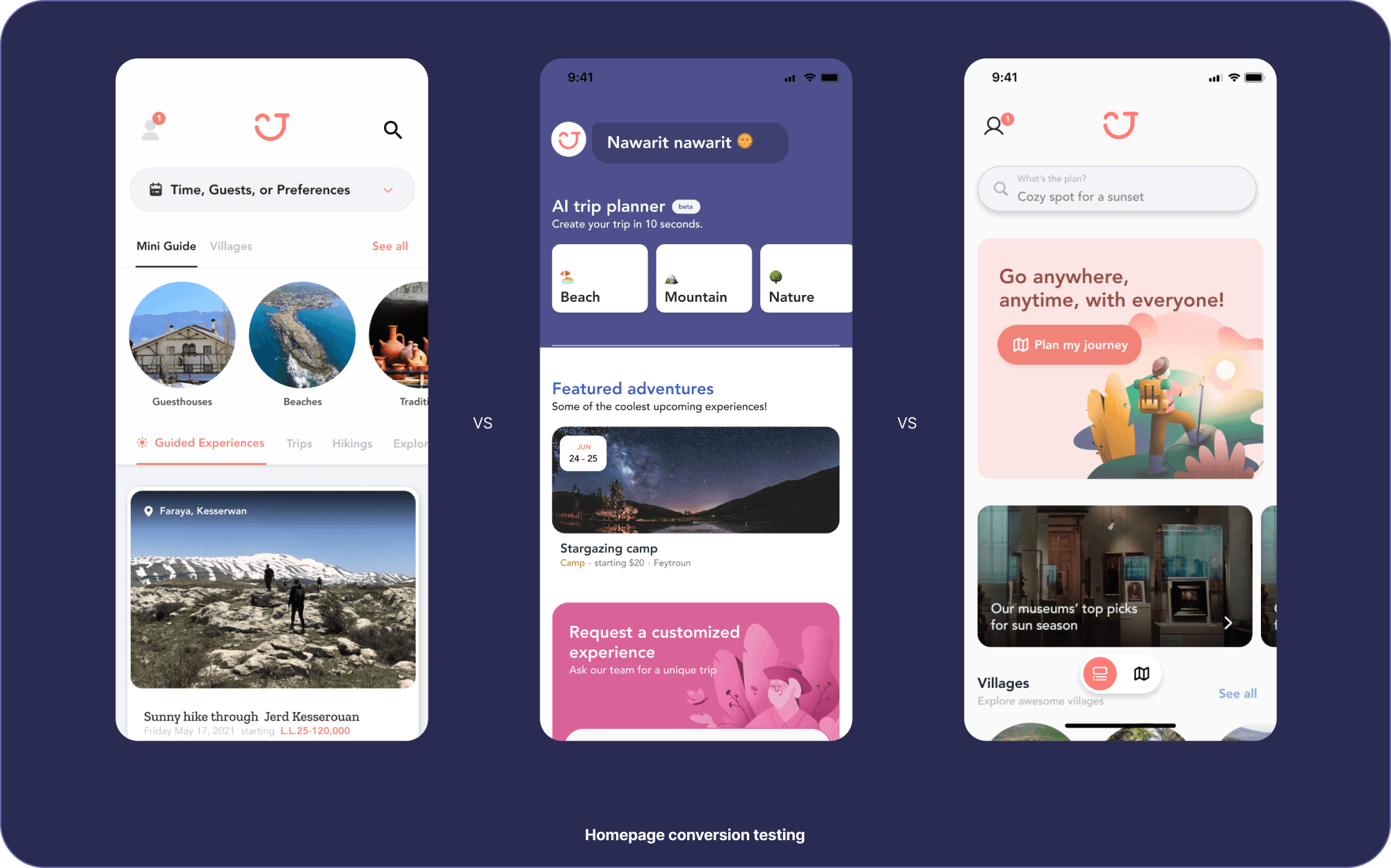
Initial Multi-variate tests we did (The middle won)
We secured $100,000 and launched V2. It exceeded every expectation.
$12k revenue in first 2 months post-launch And right after the second release, we hit:
53,000
Active Users
$100,000
Cumulative within 6 months
$0.73
CAC
Shortly after, the outbreak of war in Gaza and Southern Lebanon severely impacted the tourism industry, halting demand and scaling plans.
In response, a strategic partnership was formed with a startup studio in Saudi Arabia. However, we had no runway, investment, and minimal on-the-ground work in KSA.
Based on these signals, we made the decision to stop.
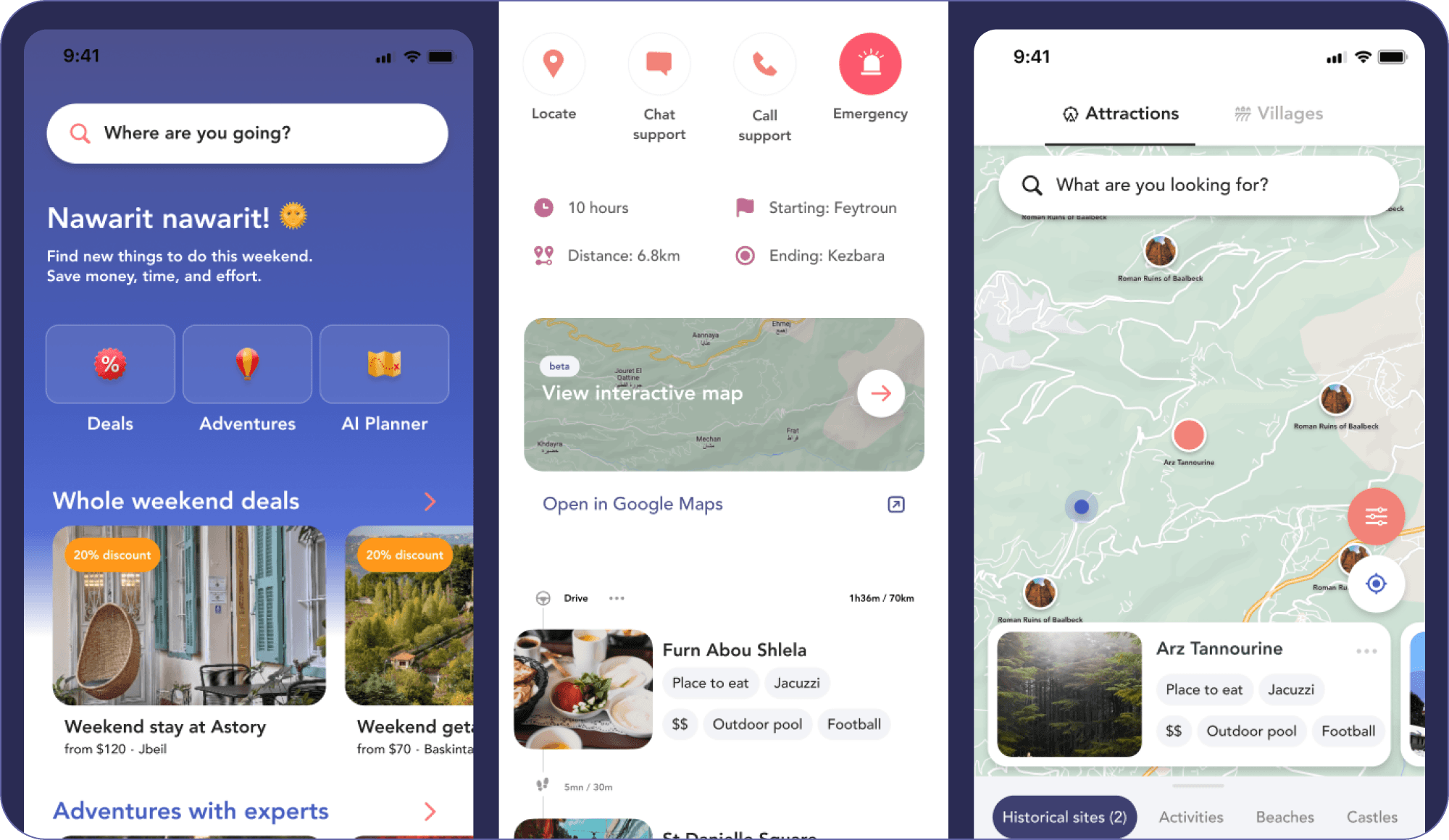
Final version before the sunset
Learnings
Designing for uncertainty means knowing when to accelerate and when to stop.
The same signal-driven discipline that enabled learning and fast iteration, enabled both rapid growth and a timely exit.
This mindset continues to shape how I evaluate product bets today: prioritizing learning velocity, structural advantage, and judgment over momentum alone.